Showing posts with label japan. Show all posts

Sunday, June 22, 2008

Toyama Medicine

Toyama medicine

This origami cube advertises "Toyama's Medicine - 300 Years of History."

I usually don't indulge in travel souvenirs.
I take photos, but don't really need trinkets. And I am bad at finding those for other people. They always strike me as kind of chintzy. But while I was in Japan this year, I stopped at Iwase, a port town in Toyama prefecture, and found a small trinket shop with a medicine counter. As it turns out, Toyama is famous for its medicines, having a long history of powders and treatments being brought to rural customers by itinerant druggists.
Toyama Kusuriyasan Drug SalesmanToyama Kusuriyasan Drug Salesman
A traveling drug salesman from olden times, and one from more recent times.

I fell in love with the package design of these slim envelopes, and Tomoko suggested I buy some - as a souvenir. I couldn't resist, and once committed to the idea, could not limit myself to only a few. So I picked up about $50 worth of medicines that I will never use - headache powders, stomach relief, and what all else I don't even know. But the art on these is so nice I wanted to put them up here for people to see.
Toyama Kusuri Medicine PacketToyama Kusuri Medicine PacketToyama Kusuri Medicine PacketToyama Kusuri Medicine PacketToyama Kusuri Medicine PacketToyama Kusuri Medicine Packet

They remind me a little bit of Polish movie posters - which I have written about on this blog before. This is product design without the boring constrictions so typical in the US. I know a lot of people don't think much about advertising, but I work in that industry, and trust me, the people who make it often think too much about it. Which is part of the reason why I think it tends to look so uniform and uninteresting. Avoiding photography and choosing instead to go with an entirely hand-painted approach automatically contributes more life to these designs. But I also love their color palettes, text treatments, and the depictions of masks, demons and devils.

Toyama Kusuri Medicine PacketToyama Kusuri Medicine PacketToyama Kusuri Medicine PacketToyama Kusuri Medicine PacketToyama Kusuri Medicine PacketToyama Kusuri Medicine Packet

After displaying these packets proudly to Tomoko's mother, she told me that the tradition of traveling drug salesmen continues to this day in Toyama. She pulled a plastic pill box down from atop her refrigerator and showed several packages of her own. She explained that the box was left stocked in each home, and when the salesman returned he deducted what was used from the box and presented a bill for it. In some of the rural areas of Gifu, south of her house, I could definitely see this kind of service being useful, but in the suburbs of Toyama it was mostly just an interesting holdover from an earlier time.

I might have looked a little strange in the drug shop, a foreigner with a camera around my neck, ogling the merchandise, but I was probably the biggest customer for headache powders all that week.

Toyama Kusuri Medicine Packet

Wednesday, February 27, 2008

JLPTの3級を受かった


Well, once again I passed the JLPT - Japanese Language Proficiency Test. The test is given every year around November or December and it takes until February to receive the results. There are four test-levels; level 4 and 3, which I have now passed, are the easiest. I understand that Level 2 is significantly harder. There are three sections to the test: Writing/Vocabulary, Listening, and Reading/Grammar. The only section I improved on from last year was Reading/Grammar. My listening really went down. I guess that's what happens when you stop taking classes.
Passing score was 240/400. I managed a 317 this time. 50 points down from last year. Guess I better study up if I plan to keep going.

Tuesday, February 05, 2008

The Endangered Iriomote Wildcat

I just read this article in the New York Times about the danger to the Iriomote Yamaneko and decided I'd like to add a few personal notes to it.

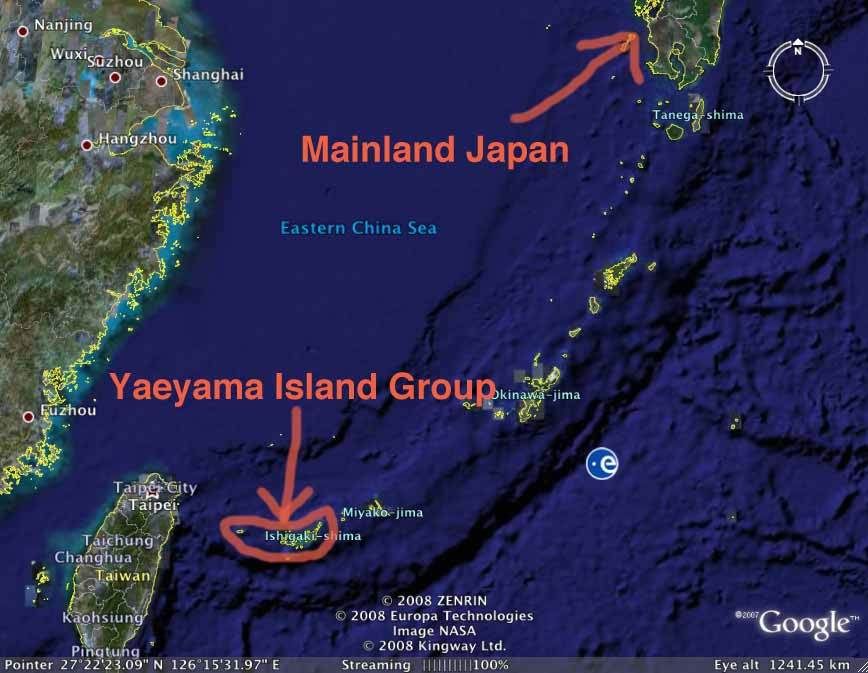
PhotobucketLast April I traveled to the Yaeyama Islands in Okinawa, Japan. It's a small island chain between the Pacific and the East China Sea, just shouting distance from Taiwan. It's a small sub-chain, along with the Miyako, the Kerama, and the main island of Okinawa (mostly known here as the home of the US military) that make up the prefecture of Okinawa. But the Yaeyama chain has it's own distinct flavor and culture, stemming from the small size of the islands and their mostly untouched rural nature. Most of the land is used for farming and raising cattle. The other main industry is tourism, with most tourists coming form within Japan. The landscape is so different from mainland Japan, that people want to come to experience something foreign and to relax in these undeveloped island settings. Kind of like US tourists going to Hawaii, but in the Yaeyamas, there is really nothing equivalent to the sprawl of Waikiki, which makes me feel like I am in downtown Santa Monica, CA. Ishigaki is the Yaeyamas' most populous island, and most of its population (about 44,000) lives in the capital city at the south of the island, preserving an undeveloped island feel for miles northward.

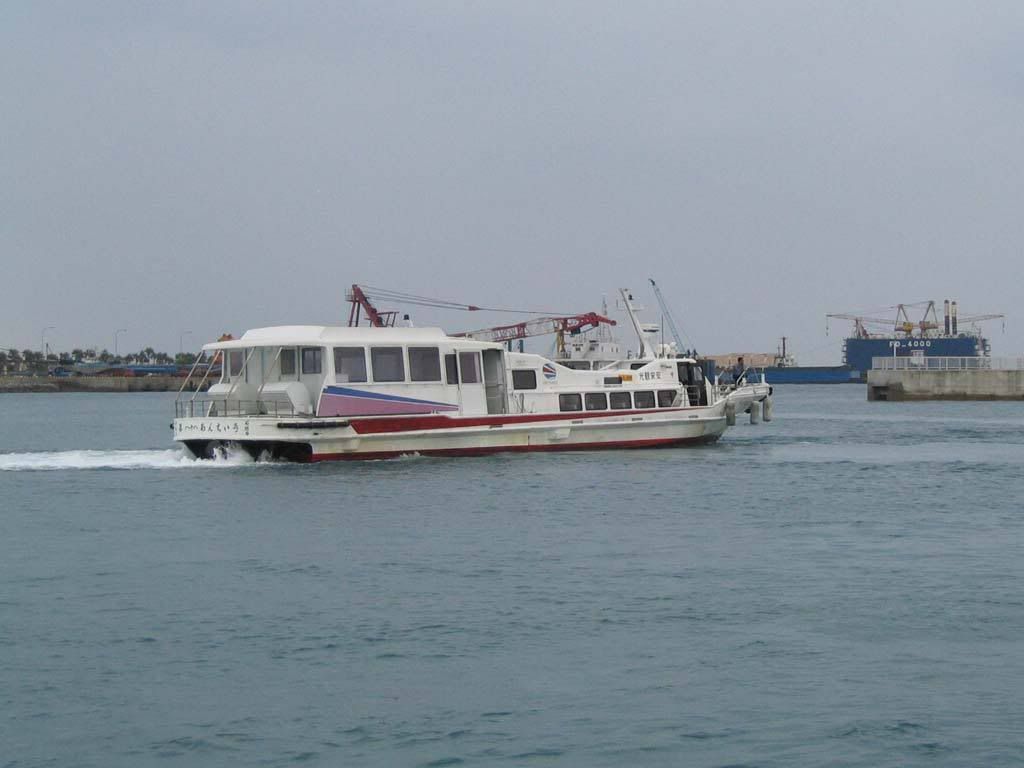
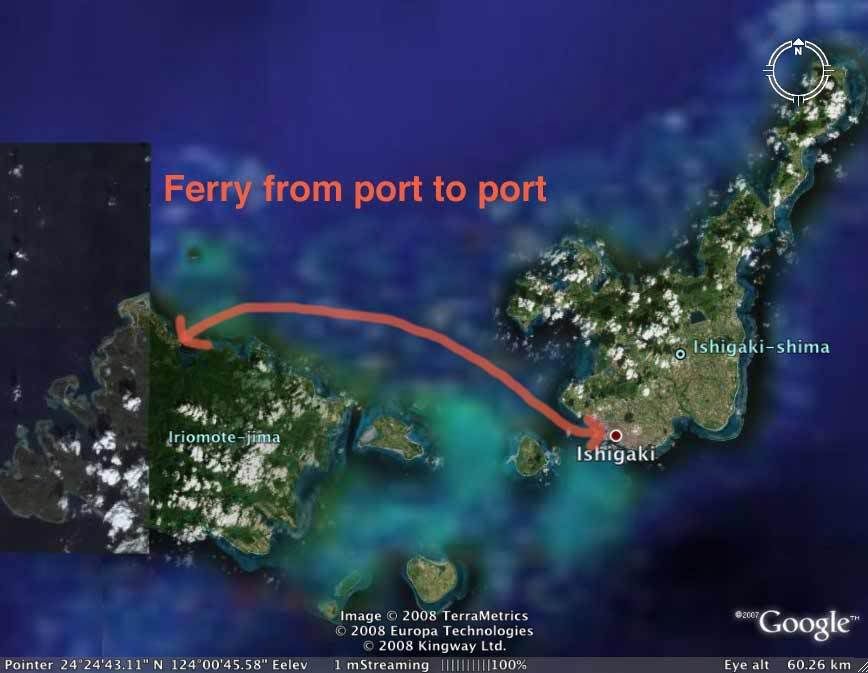
Anei Kanko FerryYaeyama Islands Satellite ViewFerry to Iriomote

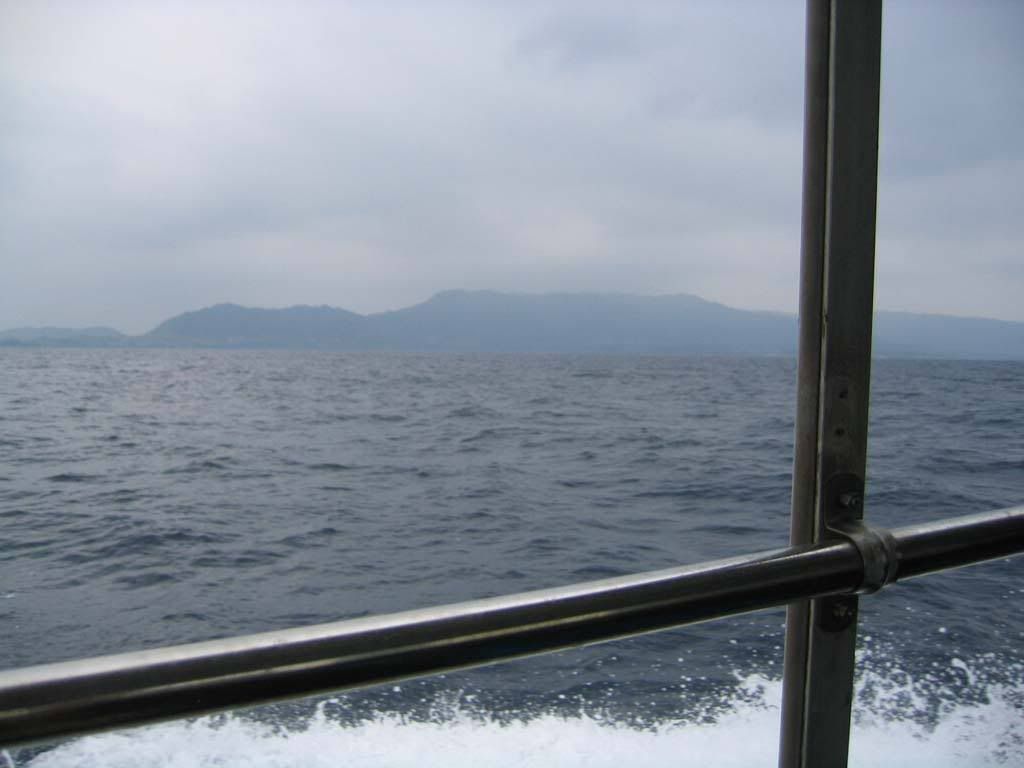
Among the chain is Iriomote island, about an hour by ferry from Ishigaki, which is the main travel hub in and out of Yaeyama. Iriomote is actually the largest island in the chain, but also the least populous (currently). With only 2,325 people, the island is designated as a national park by the Japanese government. From what I could see, tourism was indeed its biggest industry. Most of the island is an undeveloped natural paradise. There is one two-lane road that makes an arc around the western half of the island (the eastern half cannot be traveled by car). Most of the businesses (shops, inns, gas station), towns, beaches and other attractions are accessed by this road.

PhotobucketOne of the biggest draws for me to visit there was the possibility of hiking into the unspoiled back-country. I read about this on a site written in limited English, and I just had to do it. So, with help from a Japanese-speaking friend, I contacted a guide who agreed to take me on the hike, which traverses the entire island in a day (approx 16km - not very hard, but all of it through wild jungle).
I read some accounts of English-speaking tourists doing the hike by themselves. There were a handful of American or British English language school teachers living in Japan, who traveled to Iriomote on their vacations and decided to do the hike. They gave good information, but also confessed that it was impossible at times to find the trail and it took them far longer to finish than was estimated. One very helpful blogger, Justin, corresponded with me and sent his photos taken with his girlfriend while on the hike. They could not read Japanese, though, and halfway through the hike they encountered a sign with writing in green and red. They followed the green arrow. They got lost, it began to rain and they had to pitch a tent. The next day, his girlfriend fell in a river and got her passport wet. They made it out and enjoyed it. I was not discouraged, but I did not want to spend the night in the jungle with the Habu - a poisonous, and nocturnal, pit viper.

As it turned out, enlisting the aid of the guide was one of the highlights of my trip. His name was Morimoto-san (nicknamed "Taishi"). Despite his limited English and my limited Japanese, he was a wealth of information about the jungle, having lived on Iriomote for years. He was not a native of the island, having moved there from Kyushu, but he was the only dedicated volunteer park ranger, and generally seemed to be regarded locally as a leading authority on the flora and fauna there.

Taishi Morimoto Iriomote Guide
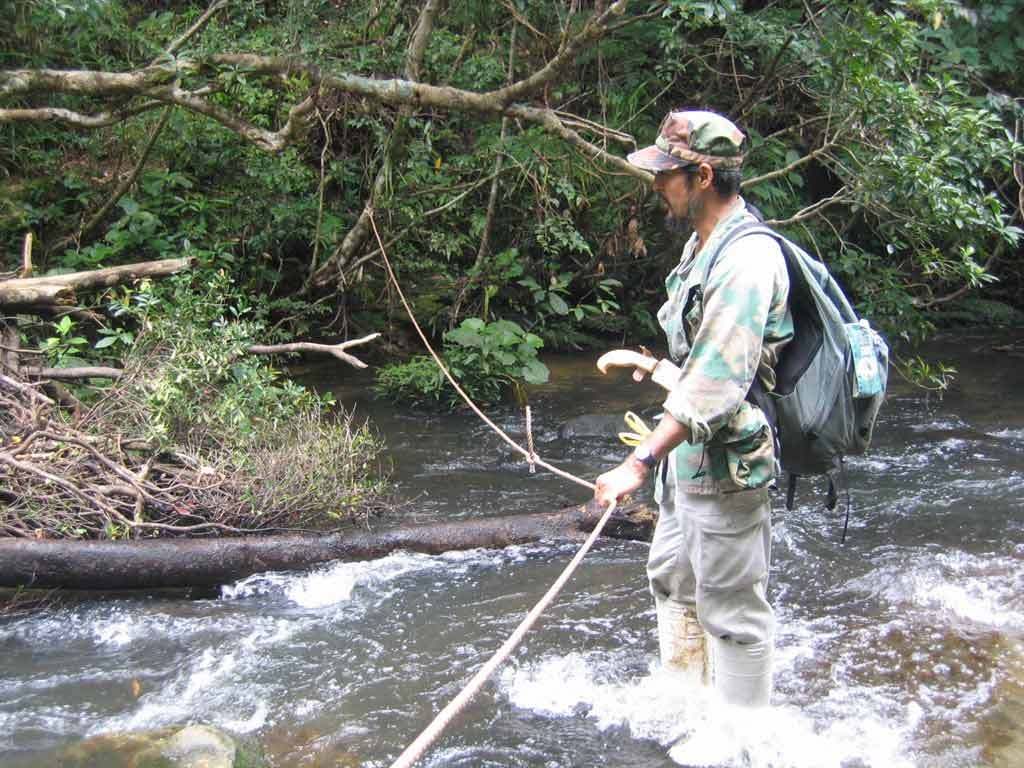
We drove together to the mouth of the Urauchigawa and boarded a boat upriver to the trailhead. While we hiked, he would identify trees, plants, bugs, even historical artifacts from the Ryukyu era and the coal-mining days, sometimes pointing to illustrations in a nature encyclopedia that he had contributed to. When our crossing was blocked by a fallen tree, Morimoto-san would pull out a fold-up saw he kept in his pack and cut through the branches. When we passed calf-deep through running water (acquiring some leeches in the process), there were ropes to hold onto, which Morimoto-san had tied in place previously. Taishi Morimoto Iriomote OdanIf he saw the smallest scrap of an object foreign to the wilderness, like an old sock, he picked it up. Thankfully, there was very little of that kind of thing, since few people pass through here. He told me that he was not paid for serving as a ranger for the island, so acting as a guide provided him with an income while enabling him to maintain the wilderness.

When we reached about the halfway point, we passed the sign that had scuttled Justin and his girlfriend. Next to the green arrow Morimoto-san had written, "Dame," meaning "No good, don't pass this way." That path had been made impassable by a typhoon. The red arrow pointed the proper way out to Ootomi village, and after taking a short break we followed it. Again, I was glad I had chosen to go with Morimoto-san.

Iriomote is the world's only home to the yamaneko, which Morimoto-san told me was about the size of a housecat. This animal has been made famous in Japanese animation (thereby introducing it to an audience worldwide), but few people have actually seen the animal. Morimoto-san has seen it and a big part of his passion for preserving Iriomote's ecology is tied up with preserving the yamaneko. He told me that there were thought to be only about 100 of the animals left, and that each year an average of two were killed while crossing the island's only road. The road now has warning signs with images of the cat, drawn by Morimoto-san himself.

Photobucket
After finishing the hike, Morimoto-san's wife picked us up at the south end of the island and we made our way back by car. Along the way, they pointed out two new hotels being built. Just last year, most of the lodgings on Iriomote were rather basic. The place I stayed was a minshuku - akin to a hostel, with simple rooms and tatami mat beds. The new buildings looked as if they might cater to a more deluxe class of traveler. On the one hand, this may be good for Iriomote's economy, and probably bring more business to Morimoto-san and other tour guides (not to mention more money for natural preservation projects), but their construction and existence also threatens the already perilous balance of nature on the island. The worst thing for Iriomote would be a large influx of tourists not interested in the jungle, but only in expanding the frontier of the "Club Med" type experience.

I did not see the yamaneko while doing the hike. But I hope that I could still have a chance to see one on a return trip.
If you decide to go to Iriomote, visit the jungle with Banana-House (Japanese only), Morimoto-san's tour company. You do not have to trek the entire island, he also offers kayak trips and other activities.
Also, look up Kanpira-So as a place to stay, and see if you can go snorkeling or hike to Pinaisara Falls with Toshio, who operates the Mifaiyu tour service, next door to Kanpira-So.

Friday, October 26, 2007

Morbidezza: 書を捨てよ町へ出よう

Film Review: Throw Away Your Books and Go Out Into the Streets
1971 Japan. dir: Shuji Terayama

I recently obtained a copy of a film called Throw Away Your Books, Rally in the Streets made in Japan in 1971. Two weeks prior to watching it, I watched another film from the same era, Easy Rider, with someone from Japan who had never seen it before. Mulling over the Japanese film for several days afterward, I pondered the similarities between the films, and realized bemusedly that "書を捨てよ" probably had the same effect on me that Easy Rider had on my Japanese friend. Probably, neither of us quite grasped the full impact of certain visual (or musical) references, but we each understood that the films represented a bas-relief of the specific cultural attitudes from which they emerged.

I know next to nothing about Shuji Terayama (the film's director), but I have gleaned that he was a member of a group called the Art Theater Guild, which played a crucial role in the independent Japanese film industry starting in about the late 1960s. The Art Theater Guild was a kind of filmmakers cooperative, whose chief purpose was to provide a distribution outlet for struggling independent filmmakers. Japan's film industry at that time was a studio system not unlike Hollywood's of the same era, so forming such an organization made a lot of sense for art filmmakers who would other wise have little chance getting distribution. The Art Theater Guild was able to make one-on-one arrangements with theater owners to give their titles limited runs, at times when theater owners might otherwise be facing programming slowdowns. A by-product of this coalition was that many of these filmmakers collaborated on each others' work - so it became a kind of production workshop/studio in its own right. The roster of Japanese filmmakers associated in one way or another with the Art Theater Guild is an impressive roll call, and includes Nagisa Oshima and Toshio Matsumoto. In this regard, Terayama and ATG occupied a similar space in the Japanese film industry as Hopper, Fonda, Altman and others occupied in Hollywood - at the crest of a wave of changes in film aesthetics and industry business practices.

As a straight narrative, Throw Away Your Books is much more loosely wrapped than Easy Rider (which, as a buddy-road movie, is essentially a "quest," and one of the oldest narrative models known to Western culture). Terayama's film is a series of vignettes, following a young protagonist and his family and friends, intercut with documentary elements. It is bookended by two sequences in which the narrator breaks the 4th wall and addresses the audience in a monologue on the artificiality of cinema. Obviously, these filmmakers who contributed to what became known as the "Japanese New Wave" took much inspiration from the French movement of the same name. However, in content it clearly urges Japan to reclaim an identity that is free of Western influence.

In the film's symmetrical bookend sequences, the narrator speaks directly to the audience, mockingly identifying himself as "no one," a figure of no historical importance. He questions our willingness to sit in the dark and wait for something to happen, for events to be revealed by insignificant shadows on the screen. At the film's end he chides our readiness to stroll out of the theater and let the events we'd witnessed be banished from our memories as daylight banishes the image from a movie screen.

Cueing the lights to come up, the narrator reveals himself to be standing amongst all of the crew members. "Although it is true that movies themselves can exist only in the dark," he tells us, "[from them can be born something which we can take away, into our daily lives.]"

There is almost a pre-punk, anti-Establishment ethic to the film. It swears off Western capitalism, it burns the American flag, there is a "Primer For Young People on How to do Drugs" vignette. It's easy to understand where this comes from. Japan's entire post-war identity was modeled after the US.

Terayama blasts Japan for being "like a lizard, captured in the Cola bottle" of the US, humiliated and incapable of escape. Over a shot of trashed empty cigarette cartons, branded "Peace," one of the film's many songs shouts "We want real peace." It's not just real peace that seems to be the bone of contention, but a real identity of this generation's own making, rather than an inheritance of the legacy of WWII.

All of the angst, the loud music, wild handheld camera, sexuality and drug use is part of the generational rebellion that was ocurring all over the world in the late 60s and early 70s. For American youth as much as Japanese, the generational rebellion was probably influenced in part by the legacy of WWII, since in the US it was the righteous victory against Fascism that was turned upside down in Vietnam which ignited the youth movement. In Terayama's depiction of Japan, WWII hangs over the family, even though the official Occupation has ended. Father is a "beaten dog, a war criminal," who drinks, pilfers money from his son and spies on women in the toilet. "Home is a pigsty," and father wants grandma to go to an old folks' home run by American-influenced Christian missionaries. Terayama's protagonist's urge to leave "home" could be read as a desire to escape the paternalistic shadow of the US.


There is a recurrent image in the film of the protagonist at the helm of a lightweight glider, trying to take flight, but always just barely skimming over the ground. At the film's end, the glider burns in an empty field.

In his epilogue, the narrator tells us that while filming, each actor became their role and thus, each situation became real. And while it played on screen, it was real for each of us in the audience. The glider cannot escape the bounds of the film screen; it crashes and burns, showing us again that reality of art is finite. But the implied hope I think is that the audience will be provoked, and move "skyward" by other means. Terayama was acknowledging that his art was a seed that needed minds to take root.

Lastly, the film has a really cool final credit sequence. There are no names given (at least not on the version I saw). It is merely a long dolly past all of the faces that appeared in the film. Long ago, I saw a student film titled "Morbidezza." The term originated during the Renaissance and described an extreme delicacy in the rendering of human fleshtones. In that film, the filmmaker gathered his family around a dinner table and had them hold a pose for 10 minutes, then slowly tracked over all of their faces. In Easy Rider also, Dennis Hopper films this type of "morbidezza" sequence (to re-appropriate the term). The scene takes place in the hippie commune, during a prayer of thanks for the food they have struggled to farm. I always thought it was astoundingly sensitive and real, and kind of epitomizes a film which has become a time capsule of a specific generational attitude. In Terayama's hands the shot is equally effective, especially following his character's overt bids for anonymity, which the shot proceeds to disprove. "I am no one." "You will forget us," the narrator says. These words lead into the shot, tracking across dozens of faces, in full silence, re-familiarizing the audience with every single cast member of the past two and a half hours. In their plainness and silence, they are rendered un-anonymous. All of their individual characteristics are thrown into relief and we can stare directly into their eyes and see each living soul that played a role in creating this work. It reminds us that each of us has the power to be creative and collaborative in an infinite variety of ways.


One further note -- the last face is that of Akihiro Miwa, a famous drag performer in Japan who has a small part in the film. I really loved Kuro Bara no Yakata (Black Rose Mansion), so it was a surprise pleasure to see him pop up in another film.


A reviewer on IMDB wrote that this was the "strangest" and "best" Japanese film they had ever seen. I would describe it as neither, but it's worth checking out if you can find a copy or catch a screening.

Friday, June 22, 2007

Linda Lea I Love You Still

Linda Lea MarqueeOn foot one day in downtown LA, I noticed a dilapidated old neighborhood movie theater with a cracked marquee featuring a kimono-clad geisha. Linda Lea Japanese Films, read the marquee. Up top, I noticed the Toei Studios logo, familiar from so many yakuza and samurai flicks that I have been unearthing over the past few years on DVD.

Linda Lea MarqueeI usually make my way to the Egyptian for their annual Japanese Outlaw Masters series, which is a great way to get your fix of chanbara and yakuza films on the big screen. But seeing the Linda Lea marquee there on the edge of Little Tokyo kind of blew my mind. For one thing, there is only one operating movie theater in downtown now; chalk that up to a small residential population and the plethora of other movie/shopping "destinations" around the city. But for another, even considering the number of former theaters demolished, decrepit or being used for other purposes in downtown, I was startled to see one that specialized in Japanese films.

Linda Lea Street ViewThe theater sits on Main Street, which is not the bustling metropolitan thoroughfare that the name might suggest. The street on this block (and stretching several blocks south) is populated mostly by homeless people who are corraled into Skid Row by an unofficial and controversial policy of containment. Standing on the desolate street before the cracked marquee, I could imagine this place as it must have been in the late 1960s or early 1970s, with the words GRAVEYARD OF HONOR or SWORD OF DOOM stuck in red plastic letters to the marquee.

In fact, the theater's history is much older than that. I found a great site called Cinema Treasures, on which users submit data about old theaters dug up from public records. The history of the Linda Lea is a little patchy and hard to follow. It seems to have gone by several different names, and there are records of different kinds of businesses inhabiting the address. As far back as 1890, there are conflicting city records documenting the existence of (variously) a saloon, a furniture store and the Los Angeles Floral Society, all at 251 S. Main. Confusing matters slightly is the fact that, apparently, another theater existed at 255 S. Main (next-door), which was known at different times as the Union and the New York. Clearly, from looking at newspaper articles and directories, Main Street in the early 1900s was a booming entertainment district with many bars, burlesques, shops and theaters. The first real historic thread for the Linda Lea appears in 1924, when a construction contract was put together to build a 500-seat theater at 251 S. Main, the site where she currently stands.

Linda Lea Street View

A photo of Main St taken c.1925, showing the Arrow Theater, later to become the Linda Lea. Note the distinctive upward slope on the roof and the sign proclaiming "All Seats 10 cents." This is where the Linda Lea/Toei logo would later be mounted. From LA Public Library. Click to enlarge.

In 1925, right around the time the Arrow (as it was then known) was opening for business, another theater was built just up the street at 324 E. 1st St, in the heart of Little Tokyo. It was called the Fuji-Kan and screened Japanese movies exclusively. Wikipedia* states that "At its peak, Little Tokyo had approximately 30,000 Japanese Americans living in the area." That's about the estimated population of all residents in downtown today. Clearly, there was enough patronage for an all-Japanese movie theater. But 16 years later, that would change with the attack on Pearl Harbor and Roosevelt's Executive Order 9066. In 1942, Little Tokyo became a ghost town. The doors of the Fuji-Kan were boarded up.

Fuji Kan Theater 1939Fuji Kan Theater 1941
The Fuji Kan Theater at 324 E. 1st St. Left: 1939. Right: 1941.

With many white American men in military service, African-Americans from the South moved to California in numbers to work in the shipyards, where bosses temporarily put aside their discriminatory hiring practices to meet the demands of the war. People came to the coast cities in such numbers, there was a lack of housing. In addition, in most of the city, restrictive housing covenants were in place that prohibited African-Americans from buying or renting. The empty buildings of Little Tokyo soon became home to a thriving African-American community with an identity of its own. Few people that I've met have heard of LA's Bronzeville, as its tenure lasted only about three years. But it forms an important part of the city's history, extending the African-American corridor of Central Avenue into the heart of downtown. Music critic RJ Smith recently wrote a very interesting book on Central Avenue's cultural significance, and includes an entire chapter on jazz and rhythm-n-blues in Bronzeville.

Bronzeville Arcade
Perhaps a former restaurant, a sign over the door reads Bronzeville Arcade. Through the glass, a neon sign written in Japanese is still visible, reading 料理, or "cuisine." One of many Little Tokyo buildings that served Bronzeville residents. c.1945 (From the Bronzeville site.)
In 1945, the Fuji-Kan, now sitting in the heart of Bronzeville, re-opened as the Linda Lea. At its gala opening on Sat Feb 10, there was a double-feature of Minstrel Man and Brazil, as well as an orchestra, tap dancers and other stage performers. Meanwhile, the Arrow Theater back on Main was undergoing its own changes. Sometime around 1940, it changed its name to the Azteca and began showing Spanish language films. A news photo from Nov 20 1940 shows the building's marquee (minus the geisha of today), with the titles El Vuelo de la Muerte, and Bajo el Cielo de Mexico.

It's interesting to me seeing how the names of the theaters, and the titles of the films programmed, reflect the changes in the area demographics. In addition to the creation of Bronzeville, one of the other side-effects of the Japanese internment was an increase in Mexican immigrants. LA has always had a large Mexican population, but during the internment, there were more people coming directly from Mexico to work. Japanese-Americans played a large role in farming and agriculture, operating their own farms, or working for other growers. In Hawaii for instance, where Pearl Harbor actually ocurred, the Japanese-Americans were not interned, because the government recognized that their labor in pineapple and sugarcane fields was too indispensible, and could result in economic collapse if lost. Just as the war industry was willing to look the other way when it came to hiring African-Americans in the factories, some Japanese were released from the detention camps in order to help harvest crops. "They literally saved the beet harvest in '42 and '43, because so many of the men were away for the war," said Patricia Wolfe, treasurer of the Heart Mountain, Wyoming Foundation.(USAToday*). America was facing a shortage of labor of crisis proportions, so Mexicans were brought in by train to downtown LA Union Station, under the Bracero Program.

From 1945-46, with the war still on, but Japan in retreat, the internment camps began to close and release Japanese-Americans. They had lost farms, houses and shops, and would find it difficult to resume life as before. Nevertheless, there were those who returned and downtown landlords returned their leases, beginning a transition that ended the Bronzeville era. In 1947, the Linda Lea on 1st St (the former Fuji-Kan) closed down and re-opened at 251 S. Main, replacing the Azteca (the former Arrow). I have not yet found information on whether the theater switched its programming to Japanese films at this time. One can only speculate as to why the name remained Linda Lea once Japanese programming resumed.

After the internment, Little Tokyo would never fully recover, as most families moved to outlying suburbs like Torrance and Gardena instead of returning to downtown. From the "30,000" believed to have lived there prior to 1941, there are now "about 1000," most of them retirees (Wikipedia*). Although the Japanese-American community became politically active in the 1970s and 80s, seeking restitution for the internment and attempting to restore Little Tokyo through community development projects, a new residential base never took hold. In the years following the war, the city of LA claimed property under Eminent Domain laws for the construction of city projects (including the Police headquarters) and the New Otani Hotel, with other portions being plowed under for industrial warehouse space. As an ethnic enclave, it became characterized by an assortment of ramen shops, video rental and bookstores, and Japanese grocery markets. Despite a recent surge in popularity of Japanese pop culture, and the resultant influx of dollars from visiting shoppers, Little Tokyo seems to be steadily assimilating into the generic downtown backdrop, as businesses like American Apparel, Office Depot and Starbucks replace storefronts previously occupied by Japanese businesses.

A friend of mine commented that Little Tokyo today is "like Disneyland," presenting a dressed-up, tourist version of its former self. Would preserving the Linda Lea only add to that sense of the artificial? Many people that I've talked with, even LA history buffs, have never heard of Bronzeville. Does the preservation of buildings like the Linda Lea automatically raise our awareness of our city's history?

Right now, downtown LA is experiencing one of the largest urban makeovers anywhere in the country. The NY Times reports that over 15,000 new residential units have been completed or are in the process of construction in downtown since 1999. There are numerous loft/condos in converted warehouses surrounding Little Tokyo with selling prices starting around $670 per square foot. Proponents of urban redevelopment can point to conditions on Skid Row and argue that change in downtown is a good thing. But few people can afford to buy in to the condos and lofts that are being built. And LA has a particular habit of destroying historic buildings, only to memorialize them later out of some pious regret. The current wave of development is just one of many changes in the downtown neighborhood over the decades, but it is the most large-scale and expensive. Is there anything wrong with asking whether downtown will be better served by franchise clothing stores, coffee shops and luxury lofts than by family-run LA institutions like Fugetsu-Do, the Japanese confectionery which has been here since 1903?

Recently, some Angelenos have banded together to slow the development of the area. After being petitioned with over 5500 public signatures, Councilwoman Jan Perry has expressed concern over the potential loss of Little Tokyo's "distinct characteristics."

Linda Lea DemolitionMulling over these things, I have watched the Linda Lea sit in disrepair for months while plans for its renovation were discussed. Finally, work is underway, although at the moment it looks like it is being completely demolished to make way for the new project. Leased by the ImaginAsian Entertainment company, the site will host a theater programming Asian films from all over the world. I'm happy to see another theater occupy this spot where, for over 80 years, people have been watching movies. That's a span of time that is almost as old as movies themselves. Hopefully the new theater will connect with an audience, and movies will continue to live on Main St. It may be interesting for some armchair history sleuth to discover the lineage of whatever building faces demolition eighty years from now.

History is a white elephant sale: what's meaningless to one may be dear to another. Unfortunately, as with so many things, the value is often determined by the highest bidder.

My Sources
Bronzeville
Cinema Treasures
Articles on Downtown Development
Little Tokyo Motion Highlights Downtown's Lack of Specific Plans
Downtown development spills into rebounding ethnic enclave
In Los Angeles, a Gehry-Designed Awakening
Articles on the Linda Lea and the ImaginAsian
ImaginAsian Center Will Add Modern Life to Main
The Linda Lea Sequel - Rundown Theater to Be Recast as One-Screen Specialty Cinema
Curtain Comes Back Up on Historic Japanese Theater
Articles on Skid Row
Desolation Boulevard
Escape from L.A.'s Skid Row Can Prove Difficult

Monday, April 30, 2007

Yaeyama Photo Blog


I finally got some pictures from my recent trip to Okinawa online to view. You can check them out by following this link.

Wednesday, April 18, 2007

Last Post From Okinawa

I'm at Naha Airport.
Not much to say. Never is when you're at the end of your vacation.
Okinawa was great.
I did not get to see much outside of Naha city, but I would like to return and visit the north side of the island.
I only spent 2 days here. I made it to Shuri-Jo, but was mildly disappointed to learn that almost the entire thing had been destroyed in the Battle of Okinawa and re-built over the past few decades. But then again, maybe I am attaching too much significance to the actual stone or wood, rather than the idea. I have heard that in Japan, many castles, shrines and temples are re-built with new materials every decade or so anyway. It keeps them in pristine condition.
Last night I went to a cool traditional Ryukyuan restaurant where some musicians were performing traditional music. I saw them performing from outside, through the second-story window, and noticed a sign explaining that they were being broadcast live on the radio. I decided to go check it out and got ushered in by one of the wait-staff.
Island music is pretty cool. It's dominated by sanshin (3-stringed guitar) and has drum and hand percussion accompaniment. But the singing is what's really cool. There are these percussive, staccato chants that the female singers stick in between choruses, like "ay, ay, ay." Maybe here at the airport I can find a CD store. I still wanted to buy a DVD copy of Dr. Koto, the TV show whose vacant set still sits on the beach at Yonaguni. I thought that would be good Japanese language practice.
The restaurant last night was a good watering hole. I got a few beers in me and was having a really good time. I would ask the waiter what a certain item was. I could read the name, but had no idea what it was. He would ask the chefs (I was sitting at the counter where I could see them preparing everything) and they would all shake their heads, and then I would say "Tabetemimasu." I will give it a try. They would nod, shout "Hai," and set about cooking it up. I tried pigface, mountain potato tempura, some kind fo raw meat that I have not yet figured out what the name means, and up front I ordered some goya champuru; in case anything after it turned out to be horrible, I would have gotten a good bed of digestible matter in my stomach first. But everythign was delicious and each time I got a new plate, I would signal to the chef that it was "Oishii," which seemed to please him.
Later on, I cruised around Kokusai Doori street, but it's all just junk shops, selling the same corny gifts: trinkets, fruits, T-shirts. It's OK, but it's similar to many other such streets. Not special the way the Yaeyamas were.
I decided that I would try to find a big bottle of Awanami Awamori as a return gift. Every shop on that long street sold awamori, but Awanami is somewhat elusive. It is made in Hateruma, the southern most island in Japan and the normal-sized bottle is said to be extremely rare. I did score some mini bottles for $10 each in Ishigaki. Last night I walked into a gift shop and asked if they had Awanami and the guy directed me to a shop down the street. I've noticed that some awamori brands use a lable with a very similar design, which is sorta amusing. I walked into the shop and found it, and read the sign that said 98000 Yen. About $80..? The shop-lady looked at me and said, "Awanami. 98000 yen."
I said, "Wakarimashita." SHe looked at me in disbelief and started talking to me in Japanese all about how no gaijin ever comes looking for that stuff and how amazed she is that I can speak at all and how jouzu I am. It was fun.
Anyway, the bottle is wrapped very carefully in several layers of underwear and towels in my checked luggage. That was the only way I could get it through security.
I sure hope it survives.
Shit. My plane will board soon.
Goodbye, Okinawa. Thanks to all the kind people.
Hope to come back soon.
-Andre.

Tuesday, April 17, 2007

Passport Lost and Found

Today was slightly harrowing.
This morning, in a rush to get my scattered crap together to make check-out time and do some sight-seeing and gift-buying during my last morning on Ishigaki, I lost my MOTHERFUCKING PASSPORT !
I had turned all my crap upside down looking for it, in all my bags (realizing that I really brought way too much crap from home that I didn't need). Yesterday, I had rented a scooter and gone around the island, stopping many places. I brought my passport and International Driver's License, needed for renting the bike. When I stopped at the Yaeyama Cultural Center, I took the passport out and stamped it with an Ishigaki stamp that was on display in one of the traditional Ryukyu village settings. Later, I stopped at Yonehara beach and jumbled my clothes around in my bag so I could do some snorkeling, which was fantastic. (Anyone who wants to know where awesome snorkeling is in Ishigaki should know about Yonehara. Next time, I want to bring a tent and camp there.)
Anyway, this morning I could only figure that maybe at Yonehara the passport and IDL had fallen out of my bag and were still laying somewhere on the sand, although I thought it odd that I would not have noticed the conspicuous dark blue US passport on the white sand beach.
Not really knowing what to do, I went to Ishigaki City Hall. My first brush with Japan's famed bureacracy. Many Americans in Japan have blogged about what a nightmare it can be to navigate the Japanese bureacracy. Maybe because it was Ishigaki and not a massive metropolis like Tokyo, or maybe because they took pity on a tourist and I was not a foreigner trying to obtain a resident alien card or something, the experience was very smooth and nothing to complain about.
I waited for about 10 minutes until an English speaking staff person could meet me. I did not feel up to the challenge of communicating in Japanese at this level. Fortunately, there was a guy working there who studied English in college. Most Japanese people seem to have had exposure to English in junior high, but their level of fluency ranges widely. Some people claim not to be able to speak and actually do fairly well, while others try to use English because they think they are being helpful, and actually it is easier to understand their Japanese. Haha.
Anyway, this guy (whose name I forgot! haha, but whose business card I have at my hotel) was very fluent and very helpful. He found the phone number for the American Consulate in Naha (Okinawa main island) and then drove me to the keisatsu (police station) to fill out a report. I was supposed to take the report, fly back to Okinawa main island and give it to the Consulate and hopefully have a new passport issued.
While we waited at the police station we chatted a bit. He asked about my job and what I had been doing in the Yaeyamas. I told him I had done a lot of diving and had gone to Yonaguni, and he perked up. "Which diving service?" he asked. I told him SaWes. "Aratake? He is my uncle!" So it turns out his mom's brother is the guy who owns SaWes diving service. He said he had a cousin who was living in Torrance, but moved to Sacramento. He went to Torrance once for a month and enjoyed it. I told him if he ever winds up back in California to come for a visit in LA, but in the madness of the moment, I forgot to say "Ni fai yuu," which might have impressed him since he was an Ishigaki native. He said his parents were from Yonaguni and I said I wanted to move there, buy a house, find a job, get married and call it a day. He told me, "Yeah, let me know. I'll help you." Hahaha. So all I need now is money.
Anyway, that was the easy part.
I got an early plane to Naha, Okinawa and jumped in a cab (expensive! about $35) to the Consulate. It was kinda amusing because the cab driver had no idea where I was requesting to go. That was when I was grateful that I had brought my electronic dictionary (and had not lost it).
When we figured out what I was talking about, we headed off. He asked me if I was "ami," or "soja." By now, I have learned these words: Japanese for "army" and "soldier." I said no and he goes, "Atama ga ii ne." You're smart. "Soldiers aren't very smart. They're no good," he told me. What could I say to that? I figured there was probably a lot of legitimacy to what he was saying. He and I seemed to hit it off pretty well though since I could communicate with him in Japanese a bit.
When we got to the Consulate, I had to speak to the guard to explain why I was there before they would open the gates and let us drive in. Kinda weird. Not really the kind of stuff you want to be doing while on vacation. Once we drive in, the cab driver starts pulling out my bags and another guard walks up and tells me in Japanese that the passport staff were already gone, as of 3pm. It was now just about 4. The cab driver looked at me like he wanted to drop me off the nearest bridge, probably thinking, "This guy is the world's biggest moron." He stuck my bags back in the trunk and we started to turn around. In my defense, I told him that the woman I had talked to on the phone told me they were open until 5. You should have complained to him, he told me. We paused for a minute and I considered jumping out to do so, but we looked at each other and thought Fuck it. "Ashita, ne." Handle this shit tomorrow.
I asked him if he knew an inexpensive business hotel, thinking I might get stuck here a couple days longer than expected. In Japan, a business hotel caters to traveling businessmen and is a little bit cheaper than a regular tourist hotel. They average around 5500 yen per night, which is about 50 bucks and they usually come with free breakfast. He said there were a lot around Kokusai Doori, which is the main drag in Naha, chock full of shops and restaurants and hotels. As we drove, he reached in his glove compartment and handed me a can of tea, apologizing that it wasn't cold. "Taihen da ne." Tough day.
When we got to the business hotel, he pulled over and said "Just a minute," running inside to check that the price was good. He came back, excitedly telling me that it was only 43000 yen per night and came with free breakfast! I thanked him profusely for all his trouble and checked in, tired and sweaty.
Like most people I have met so far, the guy was super kind and I thought about how he commented on his dislike for soldiers and how his perception of them undoubtedly extended to most Americans. It's a weird situation. I can't trash soldiers because I know who they are. They're mostly all just kids and don't know shit about Japan and don't necessarily care about it. On the plane from LA to Tokyo and again from Tokyo to Naha I sat with one Airforce guy and another Army guy. They looked tired. They looked like people do when they are at work. Their work involves traveling to foreign countries and doing whatever it is they're told to do, whether it is driving trucks in Okinawa or killing people in Iraq. I think those young guys are aware of not being necessarily well-liked here, which probably only adds to feeling alienated and uninterested in this place. It all depends on the individual of course, but my experience here is very different since I choose to be here and want to engage with people here. It seems like, even being a total dunce with Japanese language buys me the key to the city because I make an effort to fit in a little bit. I asked the cab driver if no other Americans here speak Japanese and he said none do. While we were driving down Kokusai Doori, he spotted a blonde "gaijin" (foreigner) and said, "Tomodachi?" (Is he your friend?) It's funny that Kokusai Doori (International Street) has few foreigners on it. Actually, although I have not seen much of it yet, Naha reminds me a little bit of Tokyo. Throughout Japan, you seldom see foreigners really. Which contributes to peoples' amazement when they see one, or when they see one use chopsticks, or when they see one who speaks Japanese a little bit. Which is why, even though my Japanese sucks, I get compliments (Jouzu desu ne.)
Anyway, Naha seems very crowded. There are tons of flashing lights and businesses. It may not be as easy here to make friends as it was in the small islands. The small islands are very laid-back and peaceful. Coming here is a weird way to decompress on the way back to LA.
Finishing up this story, once I had checked into my hotel, I once again tore apart my bags, thinking how much it would suck to be going back to the Consulate again tomorrow morning. And, there, buried in dirty clothes in a plastic bad with suntan lotion (so it would not get soggy at the beach) was my GODDAMN PASSPORT!
I thanked the heavens and stars and called the Consulate to apologize to the kind lady there and tell her not to expect me the next morning. Now, I am keeping it on me. Very close. In my underpants.
So, tomorrow, hopefully I will see Shuri-Jo. It is a historic castle from the days when Okinawa was the autonomous Ryukyu Kingdom. Maybe I will make it all the way north to see Churaumi Aquarium. Everything I have heard is that it is amazing, but that plan might be too ambitious. There are many things I did not get to do while here which I had wanted to, such as visiting an awamori distillery or the Orion beer brewery (I guess I could do that tomorrow), or going to the Observatory at Hateruma (the southernmost point in Japan), or camping on the beach. But that leaves me with an agenda for the next trip.
I really like Okinawa, more than any other place I have been to in Japan, and maybe any other place in general. Being here and meeting people and hearing the island music and being introduced to hougen (island dialect) really got me interested again in achieving fluency in Japanese. I know I would have benefitted so much more from certain experiences (such as the cross-island trek - the guide was an encyclopedia of knowledge or hanging out with Toshio-san or Furugen-sen) if I had been more fluent. I think when I return to LA, I will dispense with the silly community college classes and try to find a class taught by native Japanese people that is geared towards conversational fluency.
Anyway, I think I will sign off and have a look around Naha. The day after tomorrow is a long day. Crossing the International Date Line from East to West sucks! I will leave here in the PM and arrive the same day in the AM. Let's see if I can meet anyone here.
Ato de mata ne.

Monday, April 16, 2007

First Mexican In Ishigaki

PhotobucketToday is my last day on Ishigaki Island, and also my last day in the Yaeyama Islands. Today I fly to Okinawa hontou, or main island. I'm guessing it will be a different sort of experience, since I got a small taste of it when I passed through there on my way here. The feeling I got then was that the atmosphere was dominated by the US military presence. But maybe not. The airport definately was. Several times, while I have made my way through these islands, when people found out I was American (it is not always assumed, at least two people thought I was Italian), they ask me if I am "ami," which had me shaking my head in confusion until I realized they were asking me if I was in the Army.

I've met a ton of people here, all interesting, and many possessing bottomless kindness. This blog is totally backlogged, but I guess that's alright. When I get my pictures up at Kodak later, I'll try to remember to fill in the blanks in the travel chronology.
Anyway, last night was noteworthy.

I had rented a moped and made a complete circuit of Ishigaki, going all the way out to the northernmost point, where there is a lighthouse. There are many beautiful lighthouses on these islands, and I:ve seen almost all of them now. Yesterday, by the time I reached Hirakubo lighthouse, I had seen enough to only want to stay a few minutes and then jump back on the moped to race back to Ishigaki city before the road got too dark to see. So, I had returned the bike, taken a shower and was walking around the city, thinking I would buy a few omiyage (gifts for people back home). I was also looking for some place that looked like it would have good food, thinking I might go for a steak of Ishigaki beef. (All over these islands I have seen cattle grazing. It's really been quite beautiful just cruising the country backroads on the bike and viewing green hillsides with horses and cows on them. Many people are also cultivating rice fields which attract cranes.)

As I walked down the street I noticed a guy who did not really look Japanese, strumming a guitar. (There are not many, but some Japanese faces which don't really look Japanese to my non-native eye). I gave him a second look and thought he might be Latino. I kept walking, but could not really resist the urge to approach him and find out what his deal was.

PhotobucketHis name is Martin and he moved to Ishigaki four years ago. He comes from Cancun, Mexico, where he studied Japanese for about 10 years. He told me that in Cancun, people kept asking him, "Martin, when are you gonna move to Japan?" as though they were making fun of him. I found that amusingly familiar. So after a short stint in Los Angeles, he moved to the mainland, staying for awhile in Osaka before moving to Ishigaki.

He asked me how long I had been studying and nodded approvingly when I was able to converse with a couple on the street who I had been out diving with the day before, and who just happneed to be strolling by. "TV is the best learning tool. You gotta watch a lot and imitate," he told me. I mentioned that being here is really quite different than being in LA because you almost feel yourself starting to think in another language. "But," Martin said, "you cannot let a lack of native speakers in LA or wherever be an excuse for not studying. Besides," he said, "there are thousands of native speakers in LA. In Cancun, there were zero."

PhotobucketWhile we were talking, a family of three approached and the husband started talking to Martin about the guitar. As it turned out, he had stopped by to listen to Martin for the past few nights and was a guitar player himself. After a few minutes of talking about guitar and sanshin (a traditional Okinawan stringed instrument), the man sat down and began to play a couple of Beatles tunes on Martin's guitar.

For awhile after we chatted, and Martin told me about his obsessions - soccer, guitar, snorkeling, studying languages (he speaks English, Spanish, French, Japanese, and a little bit of Russian and Italian!), and he also demonstrated one of his other primary interests - skirt-chasing. Martin is a nampa extraordinaire. In other words, he excels at the art of picking up women. Well, so he claims. I only saw him get turned down, but I must say he always elicited a lot of laughter and smiles with his gregarious and direct methods.

We headed to an izakaya (restaurant/bar) for some food and a few beers. Martin checked the place out first to see if any girls were in there that he might want to talk to first. He did not think the prospects looekd great, but he figured some cute girls might stroll in later. We sat and talked about diving, living abroad, and his business (he set up his own language school). While we were talking, the couple across from us took notice and the guy introduced himself. He and his girlfriend were Ishigaki natives and wanted to compliment us on our (mostly Martin's) Japanese ability and skillful use of hashi (chopsticks). I have found that I get that a lot in Japan. It does not matter how shitty my Japanese is, people will forever compliment me on how "jouzu" I am. Courtesy is big.

Martin talked with the guy for ahwile. I think his name was Hide, but I've already mentioned that I have a talent for forgetting names if I do not write them down. I could follow the gist of the conversation, but the details were tough. Hide (as I suppose I wil refer to him) talked about how parents always force their kids to study, taking all the fun out of it and conditioning people to hate study, which makes it harder later in life to try hard to learn something. He watches a lot of American movies with Japanese subtitles to practice listening to English. "He LOVES movies," his girlfriend said. "Culture is more important than language," Hide said, which I suppose means that language is just the key to understanding the culture. It was kinda funny to me to find people doing the same thing I am, interested in learning another language, another culture and being obsessed with movies.

Martin claimed that many people just do not have the requisite discipline to learn another language though. He was very disciplined and demonstrated amazing an amazing memory when Hide taught us some hougen (hougen is island dialect). He taught us three phrases. "We are brothers from the first time we meet," (does not translate to English very well, but said to someone you hit it off with), "Thank you very much," and "Nice to meet you." Of the three, I can only remember "Ni fai sei yu," which is "Thank you very much." (And I can only remember that one because Toshio-san taught me that on Iriomote.) But Martin's brain was like a sponge and he could repeat each one after hearing it only once. When Hide and his girlfriend told Martin he was "jouzu," I think it was pretty goddamn sincere.

While were walking, Martin said, "To really master the language, you gotta get inside the person's head, anticipate, be ahead of the game. Know what they think, know what they expect." I considered how his thoughts echoed Hide's as we stared down the street, Martin scanning for beautiful women. "Know what the rules are. And break them," he burst out laughing.

Photobucket