

I just read this article in the New York Times about the danger to the Iriomote Yamaneko and decided I'd like to add a few personal notes to it.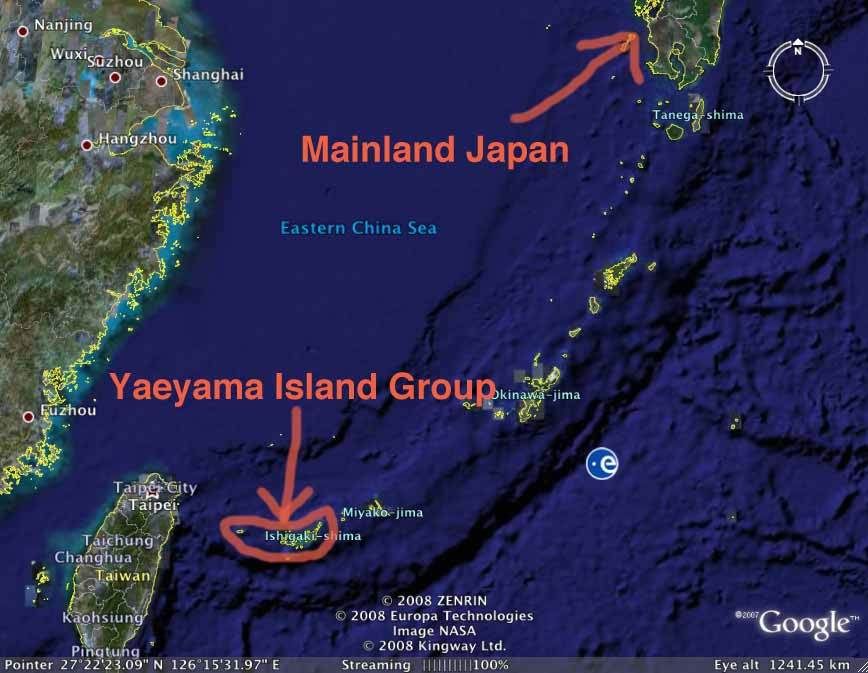
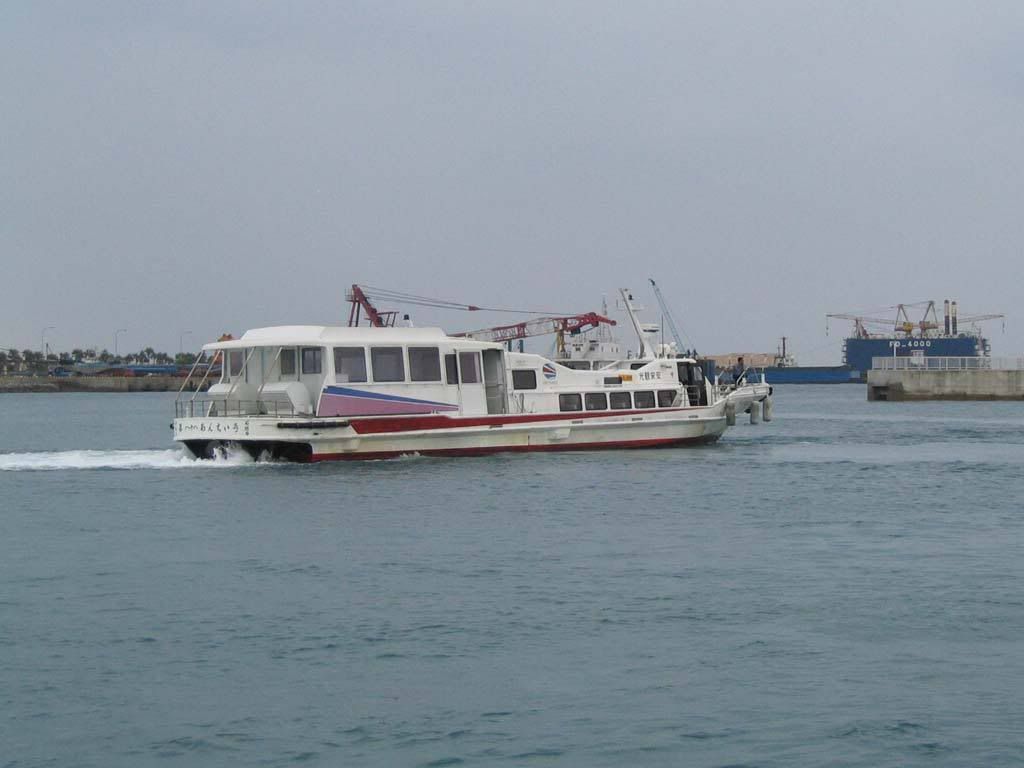
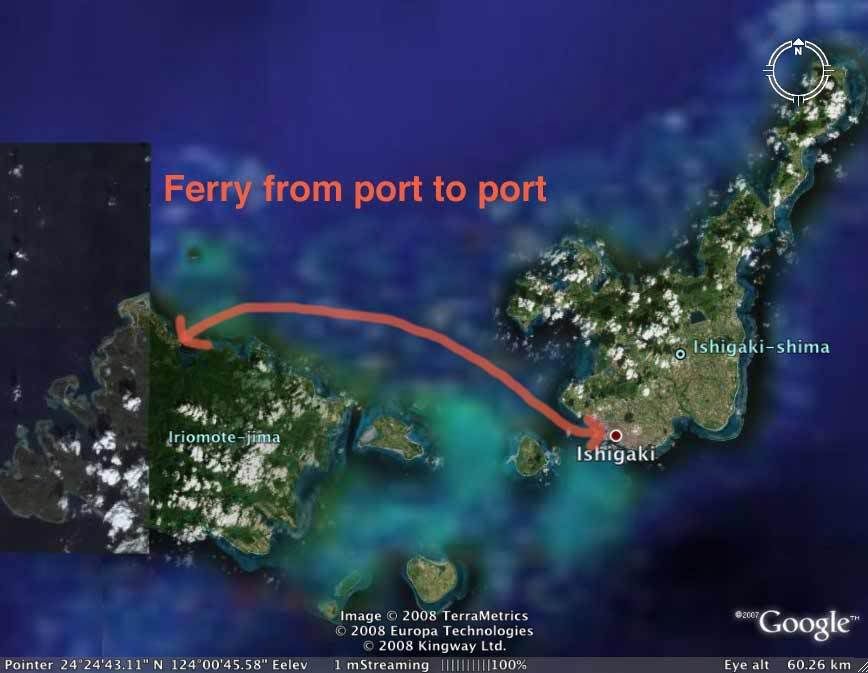
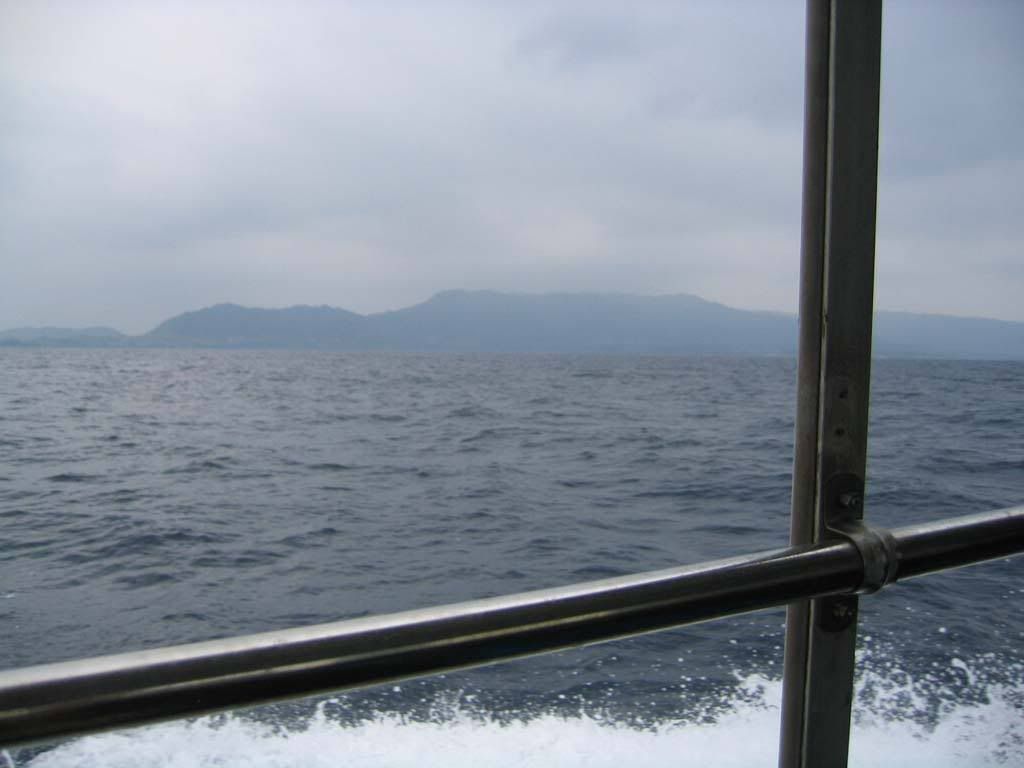
Among the chain is Iriomote island, about an hour by ferry from Ishigaki, which is the main travel hub in and out of Yaeyama. Iriomote is actually the largest island in the chain, but also the least populous (currently). With only 2,325 people, the island is designated as a national park by the Japanese government. From what I could see, tourism was indeed its biggest industry. Most of the island is an undeveloped natural paradise. There is one two-lane road that makes an arc around the western half of the island (the eastern half cannot be traveled by car). Most of the businesses (shops, inns, gas station), towns, beaches and other attractions are accessed by this road. 
I read some accounts of English-speaking tourists doing the hike by themselves. There were a handful of American or British English language school teachers living in Japan, who traveled to Iriomote on their vacations and decided to do the hike. They gave good information, but also confessed that it was impossible at times to find the trail and it took them far longer to finish than was estimated. One very helpful blogger, Justin, corresponded with me and sent his photos taken with his girlfriend while on the hike. They could not read Japanese, though, and halfway through the hike they encountered a sign with writing in green and red. They followed the green arrow. They got lost, it began to rain and they had to pitch a tent. The next day, his girlfriend fell in a river and got her passport wet. They made it out and enjoyed it. I was not discouraged, but I did not want to spend the night in the jungle with the Habu - a poisonous, and nocturnal, pit viper.
As it turned out, enlisting the aid of the guide was one of the highlights of my trip. His name was Morimoto-san (nicknamed "Taishi"). Despite his limited English and my limited Japanese, he was a wealth of information about the jungle, having lived on Iriomote for years. He was not a native of the island, having moved there from Kyushu, but he was the only dedicated volunteer park ranger, and generally seemed to be regarded locally as a leading authority on the flora and fauna there.
We drove together to the mouth of the Urauchigawa and boarded a boat upriver to the trailhead. While we hiked, he would identify trees, plants, bugs, even historical artifacts from the Ryukyu era and the coal-mining days, sometimes pointing to illustrations in a nature encyclopedia that he had contributed to. When our crossing was blocked by a fallen tree, Morimoto-san would pull out a fold-up saw he kept in his pack and cut through the branches. When we passed calf-deep through running water (acquiring some leeches in the process), there were ropes to hold onto, which Morimoto-san had tied in place previously. 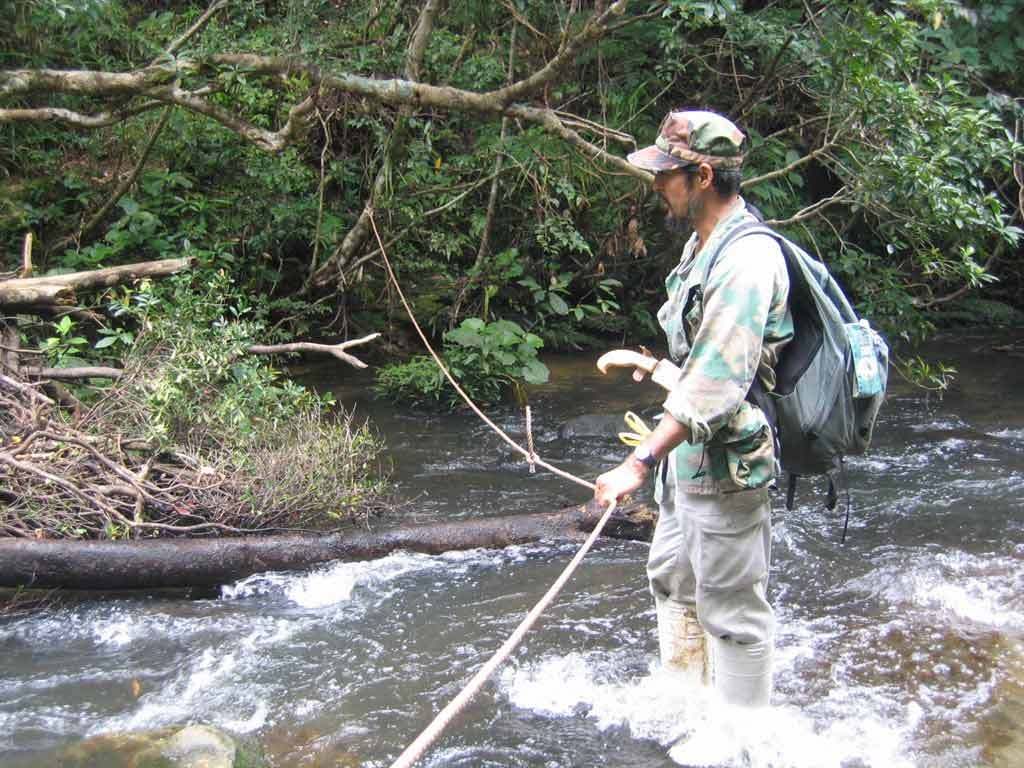
When we reached about the halfway point, we passed the sign that had scuttled Justin and his girlfriend. Next to the green arrow Morimoto-san had written, "Dame," meaning "No good, don't pass this way." That path had been made impassable by a typhoon. The red arrow pointed the proper way out to Ootomi village, and after taking a short break we followed it. Again, I was glad I had chosen to go with Morimoto-san.
Iriomote is the world's only home to the yamaneko, which Morimoto-san told me was about the size of a housecat. This animal has been made famous in Japanese animation (thereby introducing it to an audience worldwide), but few people have actually seen the animal. Morimoto-san has seen it and a big part of his passion for preserving Iriomote's ecology is tied up with preserving the yamaneko. He told me that there were thought to be only about 100 of the animals left, and that each year an average of two were killed while crossing the island's only road. The road now has warning signs with images of the cat, drawn by Morimoto-san himself.
After finishing the hike, Morimoto-san's wife picked us up at the south end of the island and we made our way back by car. Along the way, they pointed out two new hotels being built. Just last year, most of the lodgings on Iriomote were rather basic. The place I stayed was a minshuku - akin to a hostel, with simple rooms and tatami mat beds. The new buildings looked as if they might cater to a more deluxe class of traveler. On the one hand, this may be good for Iriomote's economy, and probably bring more business to Morimoto-san and other tour guides (not to mention more money for natural preservation projects), but their construction and existence also threatens the already perilous balance of nature on the island. The worst thing for Iriomote would be a large influx of tourists not interested in the jungle, but only in expanding the frontier of the "Club Med" type experience.
I did not see the yamaneko while doing the hike. But I hope that I could still have a chance to see one on a return trip.
If you decide to go to Iriomote, visit the jungle with Banana-House (Japanese only), Morimoto-san's tour company. You do not have to trek the entire island, he also offers kayak trips and other activities.
Also, look up Kanpira-So as a place to stay, and see if you can go snorkeling or hike to Pinaisara Falls with Toshio, who operates the Mifaiyu tour service, next door to Kanpira-So.


City Hall Rainbow
-
Was chasing this rainbow down the 5 freeway from Burbank to downtown. Had
about 2 minutes to photograph it before the setting sun disappeared behind
the c...
7 years ago


