Saturday, August 08, 2009

To Find the Shark and Kill It - Conquering Cousteau's Silent World

Louis Malle had a hell of a film career.

From fictional features in his native France, for which he was nominated and won many international awards, to directing Hollywood films with major American stars, to his epic 6-hour TV documentary "Phantom India," his work has pretty much covered all subjects and settings, including some territory that in 1956 was quite uncharted.

I just got back from the Cinefamily at the Silent Movie Theater on Fairfax. It's been under the management of a pretty passionate cinephile for about 2 years now (same guy, I believe, who runs a video rental shop named "Cinefile" down by the Nuart), and the programming is pretty spectacular, even for a town like LA, which already has several decent rep houses competing for the attentions of the discriminating film-goer. Tonight's show was a must for me, being that a) it was two unreleased-on-DVD features, and b) the subject was the underwater world (I am a diver and underwater enthusiast), and c) one of the films was "Le Monde du Silence" (The Silent World) by Jacques Cousteau, which I have been itching to see for years, but have been unable to find even on torrent tracker sites due to its relative scarcity on video. How does this tie in to Louis Malle? Malle, it turns out, cut his teeth (fresh out of film school) by co-directing the film with Cousteau. I must confess to having never seen a Malle narrative feature, by the way, but his documentaries on India, and particularly his one on the American heartland, "God's Country" (1986), were what stirred the excitement when I first learned he had co-directed a Cousteau film. "Le Monde du Silence" was chum in the water for me: several interests bound up into one film and made extra enticing by its relative rarity.

I have not posted any thoughts to this blog in quite a while but tonight's films got a few bees buzzing around in my head, and after coming home and waiting for some rice to cook for my dinner at a tardy 12:30, I thought I'd finally get back to sharing some of that buzzing here. First off, I arrived early, which I never do, to find a line already forming outside, at least 40 minutes before the show was scheduled to start. Although there were only about 15 people waiting, I wondered whether this would be indicative of a strong turn-out. That would be miraculous. Friday night in LA and two Jacques Cousteau films from 50 years ago sell out the house? Turns out, that's exactly what happened.

As I speculated aloud while standing in line about a possible large turnout, the man waiting in front of me rationalized by explaining that the program had been highlighted by the LA Weekly as a "critic's pick" event. So there weren't really that many cool divers in LA. But nevertheless, I was still impressed.

Cinefamily's founder and programmer, Hadrian Belove, introduced the films and explained that he'd decided to show "Le Monde Sans Soleil" (1964) first, swapping the original order, because "Sans Soleil" was shot in 35mm Technicolor, and he wanted anyone who might leave after the first screening to definitely see that one. It was a beautiful 35mm flat (1.33) print, with minimal print damage (tail wear only) and no color fading. The story was mostly about Cousteau's team of divers, who he had dubbed the "Oceanauts," living in underwater research stations at several different depths, aided by their surface ship, the Calypso. Listening to the narrator give the statistical data, I was a little non-plussed with the depths of 35 feet and 85 feet for the research stations, although later my cocky superiority was leveled hearing of divers going to nearly 300 feet on trimix gas. There was a definite kind of hi-tech retro-future adventure flavor to it: part James Bond, part Danger:Diabolik. Besides the science and gadgetry combining to create a kind of futuristic, adventure spirit, in an effort to translate information into narrative, different little humorous gags were dropped in, and crew members were portrayed with enough quirks that one began to wonder why Wes Anderson felt the need to fictionalize the team into Team Zissou. There was even a scene with a cello-playing crew-member sitting atop the deck of the Calypso that gave Seu Jorge's guitar-strumming balladeer a run for his money. As the night's program wore on, it became pretty clear that Cousteau's crew was actually far more outrageous than the wildest stunts embarked on by Team Zissou (more on that later).

The audience was clearly primed for laughs (perhaps by virtue of their exposure to the Zissou crew), expecting to find the humor in a bunch of bare-chested guys playing grab-ass with each other while showering, or eating, or doing housekeeping aboard the sea-stations. Yeah, there was a lot of unintentional (I presume) homo-erotic subtext in a film about a bunch of manly men doing manly things out at sea. It was a hipster crowd, and everybody "got the joke" and the giggles continued through most of the night. Other things that elicited scattered (intentional) chuckles were the staged elements designed to dramatize the dangers or realities of underwater exploration, such as when one diver begins to experience symptoms of the Bends, and must be placed in a recompression chamber. It's a coffin-like cylinder that Cousteau and his men have rigged up on the deck of the Calypso, and after placing the diver inside, they all promptly head off to eat lunch without him. I found there to be some of the same brilliance of imagination in Cousteau as shared by Walt Disney. Both men are pitched to kids, although they can both come off as rather eccentric (with some dark overtones). They both imagine the future in great detail, but always in terms of "colonization," seemingly oblivious to the destructive effect of man's mere presence in certain environments.

Now that I think about it, when I was in Yonaguni Japan, drinking awamori with a fantastic human and diving-guide, Keizen, he asked me why I had taken up diving and I answered that when I was a kid I had seen Disney's "20,000 Leagues Under the Sea." So I can certainly respect the spirit of exploration in both of these men, and credit them for inspiring others to take an interest in the world. But I also find that with exploration, and "conquest," however benign it may seem (conquest of the sea, conquest of space, conquest of the frontier), there is a certain carelessness and disregard (and arrogance) that can accompany the drive to push forward into new worlds. "Le Monde Sans Soleil" contained some examples of this recklessness, but the earlier "Le Monde du Silence" contained far more - a fact that I hope points to an evolution in Cousteau's thinking in the intervening 10 years.

Before I detail some of the offensive bits of these films, I should take a minute to clarify that I am not a member of PETA. The strongest position I hold on animal rights is that I don't believe in torturing them (for research or any other purpose) and I don't own any pets (because I acknowledge that my neglectful irresponsible lifestyle would be a hazard to them). Still, I once explained to my diving buddy, Peter, why it was that I chose not to spear-fish (an activity he was eager to try). It was not because I don't enjoy eating fish. Oddly, every time we surfaced after a day of diving, we both shared a craving for sushi. The reason I chose not to spear-fish was that, after my first couple of night-dives, hovering among sleeping fish with my dive light blasting a beam of 8 "C" cell-powered white light over that "silent world," I realized how destructive my presence was as an observer, without becoming any further intrusive. As one of the only creatures underwater making noise, by the expulsion of my air bubbles, and certainly the only creature shining a bright light into the milky black water, I compared myself to the "ghetto-birds" that hovered over my apartment, whirling blades chopping the night sky into thunderous pieces, shining their "night sun" into windows at 2 in the morning, "observing." In my dive training, which was administered by a good guy, but not the most "humanitarian" individual imaginable, I was instructed that divers were "ambassadors to the ocean." We were to tread with caution, leave the environment untouched, to the extent that we not even touch the reefs, or stir the sand too much so as to cause a cloud in the water. We should respect the creatures whose world we were visiting, and seek to promote knowledge and awareness of oceanic concerns above water whenever possible. It was always my understanding that not only the science of diving, but these attitudes of conservation had their roots in Cousteau's legacy. I know that Cousteau was the man who was really responsible for scuba - he created the Aqualung !

So imagine my surprise (and evidently, judging by the shocked, nervous laughter, the surprise of the entire audience) when Cousteau's team was pictured, in their own film (!), proudly DYNAMITING a peaceful cove to collect specimens of fish for study (while the voice-over narration reminds us that fishing with dynamite is illegal due to the fact that many more fish will be killed than can be harvested). The camera drifts over piles of fish corpses that look like the aftermath of the Somme. This scene was a kind of climax to a building sense of shame I was feeling at watching Cousteau's researchers as they hammered away at reefs with mallets and chisels, collecting samples, or grabbed fish and stuffed them in plastic bags, which the film's narrator described without remorse as floating prisons, while the fish inside were attacked by predators who could not understand the plastic barrier that prevented them from swallowing the smaller fish. Clearly the "leave no trace" philosophy of diving did not originate with this Cousteau.

The worst episode, by far, was when a beautiful scene of hundreds of dolphins racing alongside the Calypso was followed by a scene of the team searching for whales. A cry goes up from one of the crew members and the boat races off to follow a pod of giant sperm whales. One of the crew races down to a platform below the bow of the boat, standing just above the water's surface. The narrator explains his excitement, "[in 32 years at sea, this is the closest he has ever been to a whale of this size]." He is promptly handed down a home-made harpoon by one of the crew-members. The narrator tells us that the man simply cannot resist having a throw at the giant mammal. We watch him hurl the harpoon, but it merely bounces off the whale's tough skin. The Calypso chases on, running with the whales for several minutes until the narrator notes danger. A baby whale has fallen behind the pod and the Calypso is closing in on it. Cousteau calls for the engines to slow, but it is too late. The engine room calls out that something has hit their left propeller and the camera pans over the side in time to see the water turning red and the baby whale gashed and sliced like a large sausage. The man who had previously tried his hand at harpooing decides that he must administer a "mercy kill," and delivers it with gunshot to the baby whale's head. The crew, "feeling horrible" begin to tow the body up alongside the boat, but the blood in the water attracts a school of sharks who begin to pick and tear at the whale's body. The crew, out of guilt and a general contempt for sharks, decide to "avenge" the whale by gaffing as many sharks as they can hoist aboard and BEATING the living shit out of them. No, I am not kidding. The film glories in several minutes of footage of crew hoisting whatever blunt object was handy high overhead and bringing it crashing down on the thrashing, bleeding, fighting sharks. I am a diver, and no lover of sharks. Encountering a large one would surely scare the piss out of me. But I could not for the LIFE of me understand how JACQUES fucking COUSTEAU could allow this to happen on the deck of his boat ! First of all, it was the Calypso that RAN OVER and killed the whale, not the sharks ! Second, the sharks came to feed. That's what they do. That's what they were designed to do. That is their job in nature. So seeing Cousteau's men bash their brains out with shovels and axes to "avenge" the death of the whale put Cousteau's comments about the conquest of the sea-shelf into an entirely different light. He began to sound less like the wide-eyed adventurer in a world of wonder that Disney would have depicted, and more like a Western frontiersman, looking to "tame" the wild through brute force. It even made me rethink another episode in the film, in which Cousteau's divers feed scraps of meat to a giant grouper, and then "imprison" him in a shark cage when he becomes too aggressive, dominating the feeding and preventing other fish from getting their hand-out. The divers even name him - "Ulysses." It's this weird effort to anthropomorphize the fish that seems jarring to me. These guys are supposed to be marine researchers. How can they learn anything if they are projecting all these human traits and biases and expectations on to the creatures they are studying? Suddenly, Bill Murray's dynamite-fishing Steve Zissou character begins to look less like a comedic caricature and more like a biographical commentary with his mission to "find and kill" the shark that ate his friend.

When the curtain closed, there was boisterous applause, despite the fact that many people were looking at each other with uncertain half-frowns on their faces. I'm sure people expected to find some humor and fun in the source of their beloved Bill Murray movie, and the movies were a lot of fun, and were executed with a kind of playfulness and humor that kept you engaged, not to mention the stunning underwater photography. In one brilliant sequence, plankton was shot with macro lenses to show the huge variety of organisms found within it. Another creature brought aboard was said to eat sand, digesting all the bits of plankton within it, and disposing of the indigestible grit. When turned upside down on deck, several living, symbiotic fish tumbled out. Things like this made my mouth drop open in wonder, and I am a diver who has watched many marine documentaries inspired by Cousteau and his team. I can only imagine how jaw-dropping these films must have been in the 1950s and 1960s. That said, the films are now artifacts from the past that must almost be presented with the all-too-familiar disclaimer of present-day political correctness. Just the other day, I was talking with a co-worker about Hergé and Tintin, asking her if she had ever read or heard of the infamous "Tintin in the Congo." (That book, in addition to it's racist depictions of Africans, also has a scene involving the dynamiting of animals, coincidentally). Watching these Cousteau films reminded me of that discussion because with such works you are forced to take the bad with the good. You cannot deny Hergé's talent or influence on the world of graphic line-art. Just as you cannot deny Cousteau's influence on future generations of oceanographers. But neither can you dismiss either man's callous big-headedness. Hergé can be said to have evolved, going back in an attempt to revise the content he considered shameful in some of his earlier work, and showing some degree of open-mindedness in work he completed toward the end of his career. Cousteau must have worked hard in the succeeding years to create a more positive legacy on film - films that can be shown without any need for contextualizing disclaimers about the "different attitudes" people had in the past - or I'm sure, despite his contributions to dive science, he would not be remembered as fondly now. Watching that shark slaughter made me realize why it is that this film is probably so hard to see - I imagine it has something to do with the Cousteau estate being less than flattered by it. For that matter, I was a bit surprised given Louis Malle's involvement - how much was he a party to the objectionable bits? Again, I do not know his work in great detail, but I have been drawn in by his documentaries and through them sensed a man of great sensitivity. Perhaps he filmed the Cousteau crew's wantonness unsparingly, as exposé - or maybe merely as verité, simply existing as a fly-on-the-wall to events on the ship and below the water.

I do know that films of this type have been considered good educational material for kids - at least when i was growing up. But they present some difficult questions to answer since it seems clear that the ideology behind today's Cousteau Society was not yet fully formed. Cousteau ends "Le Monde Sans Soleil" in an undersea cave, hundreds of feet below the surface. His submersible vehicle surfaces in a lake, the hatch opens, and for a moment he and his co-pilot breathe in the thousand-year-old air and shine their lights around the stone walls of an environment never seen before by man. It is a wondrous moment, and makes me wish we could be spending more money to explore the oceans, just as others wish to explore space. Perhaps if there was more extensive and better funded research on-going, we would develop deeper understanding and respect, not simply treating the oceans as our waste dump. I believe Cousteau began his mission as a seafarer of old - out to tame the sea, and claim his portion of it. But I would suppose that anyone spending such an amount of time as he did at sea would eventually have to develop a conservationist attitude. He is quoted as saying, "One protects what one likes," and maybe it is the hunters and conquerors who first become aware of the need to protect nature, as they see the ravages of man firsthand, before the rest of us even notice.

While standing in line to get in, the man in front of me mentioned mistakenly that Le Monde du Silence was co-directed by Jean-Pierre MELVILLE, rather than Louis MALLE. My God, I thought, leaving the theater. Could you imagine the film that THOSE two would have made together?

Monday, September 15, 2008

Metamorphosing into a Shapeless Mess: The Fly The Opera

Despite my general fear of the tanking economy and growing reluctance to spend any money, I had to indulge my curiosity when I heard that David Cronenberg and Howard Shore, under commission from the LA Opera were adapting their own work, THE FLY. I am not an opera buff, but I have been known to use the adjective "operatic" to describe things melodramatic or grand in scale. Although it seemed an unlikely choice for high-brow theater, the story does have operatic qualities. It's Frankenstein, or the Phantom, or some other tragic monster who probably has precedent on the classical stage.

Without knowing the stories, there are opera selections I've listened to that drew me in through musical storytelling. In the same way that I laughed the first time I heard Frank Zappa's Peaches en Regalia, I've come to appreciate classical music that can paint pictures in your brain. Once enthralled by the music, I may be interested enough to seek out the story ( which often sounds like an illustration of the music, like the best jazz vocals can capture the musical storytelling in lyric ).

I belong squarely to the "outsider" demographic that LA Opera director Placido Domingo is appealing to with his recent recruitment of film directors. Many of the opera or symphonic selections I am aware of made their way into my consciousness because I heard them in films. A number of venerated filmmakers have turned to classical for their scores, eschewing any genre of contemporary composition. Kubrick's view was that he could never get a contemporary film composer to top what a Strauss or Stravinsky had done. Can't exactly disagree with that one.

Howard Shore is, I guess, one of the more respected contemporary film composers. His Lord of the Rings score is distinctive and effective, although I felt it was slightly overused in the edit. Like anyone else in Hollywood, he's done his share of "work-for-hire"; stuff that probably meant no more than a paycheck to him. But he's worked pretty consistently with David Cronenberg, which would suggest that the collaboration is based on more than paying the mortgage.

Shore started out scoring with Cronenberg back when Cronenberg was known as more of a horror genre filmmaker. Cronenberg, with The Brood, Scanners and Videodrome, had not quite defined his own high-brow art-house, existentialist-horror genre yet, but he was on the way. Shore was there when Cronenberg first adapted The Fly, a 1950s creature-feature, into a mid-80s horror masterpiece of brain vs body.

Apparently, it was Shore's thinking years ago that THE FLY would be a great subject for opera, so once he got the commission and composed the piece, it was around him that the other creative personnel for this production coalesced. Unfortunately, if you are going to tell a story through music - a story that many are already familiar with because you have already told it - the music should be strong enough to justify it's own existence. That's not the case for THE FLY opera.

Nothing about the score was "operatic" in the sense that I would use the word. Nothing grand, or powerful and dark, like Wagner, like I might expect for a story about a man turning into an insect. Nothing much at all. Most of the score sounds like an indistinguishable sound bed of white noise - call it buzzing if you want to be charitable. It's a flat background color for the voices - which are equally written flat. Nothing ever manages to punch through and create an emotion. I found myself distracted by the English dialogue. Perhaps since operas are usually in Italian or German, when I've heard them in the past I have not been focused on the weakness of the dialogue. Here, it was inescapable, and there was the presence of the electronic libretto display above the stage ( which I suppose is now common to all opera performances ) to draw further attention to how laughably awful the sung lines were: "Care for a smoke? -No thank you, gave it up." That's by no means the worst of it, just an example of the banality.

The show was so bad, at times I found myself closing my eyes to see if the experience worked better for me as music alone - it did not. I read that Cronenberg wanted this to be different from his film, but with so much of it following the film exactly - even dialogue chunks lifted wholesale - I wondered what kind of "different" he could have possibly been going for. The film is creepy, scary, repulsive. It might exist in a genre ghetto ( you will probably never see ladies in gowns going the Chandler to see the film ), but it succeeds in its goals - it repulses you. And it does that with score, make-up, lights - the same basic ingredients available to the opera. So why does opera occupy some higher space in the cultural hierarchy? If anything, this production proves that opera can be as flaccid as television.

In the film, Jeff Goldblum contorts his body and literally transforms himself into the Brundlefly. The actor playing Brundle on stage was gifted with some impressive physical abilities, performing several feats of gymnastic strength to hammer home the point of his transformation, but he couldn't top Goldblum's total devolution, which was aided in part by outstanding special-effects make-up. Hell, Goldblum looked a little like a fly BEFORE he put the make-up on, which in a way, might've been part of the point. Isn't it about the internal being externalized? This production works overtime to try to make the connection between physical transformation and metaphysical meditation. Believe it or not, the film with all of its slime and gore, comes off more subtly in this regard because it lacks the blunt attempts to make the audience see the "existentialism" of the piece. The great thing about cheap sci-fi and horror is that, at its best, it's anything but cheap. There are great ideas and symbols lurking in it - it never tries to "legitimize" itself with blatant intellectual soap-boxing - it's messages are often deliberately encoded.

Up in the cheap nosebleed seats I saw a few people who belonged to my demographic: many of us know that we should dress up to go to opera, but have no idea how to properly do it ( purple shirts and red ties and black leather jackets and ponytails ). Even with Cronenberg-love in the house, people could not help themselves from giggling at the lame dialogue, the puppet monkey in Brundle's telepod, or Brundle's "full monty" moment. If you are a fan of the film, just recall the incredulity you felt on hearing that this would be an opera, and then the acceptance that it could be really cool. Then imagine a dark empty stage and a chorus of singers performing as the voice of Brundle's computer, narrating about 10 minutes worth of narrative events from the film, and let your feelings of disbelief return. When Brundlefly visits a poolhall and rips the arm off of a local tough guy, a scene which is inflated from a movie gross-out shock to a full blown song where the victim closes the scene alone in a spotlight, I was reminded of the cast of the Simpsons staging their production of Tennessee Williams' Oh Streetcar! Someone next to me mumbled that he was waiting for the Sharks and the Jets to make their appearance.

What sucks about watching something bad is knowing all the work and talent that went into it. Although Shore gave the singers little to do, there were times when they delivered appreciable power from the vocal cords - it just wasn't harnessed into anything that made you feel. For a story about a cerebral guy who wants to free himself from "the flesh," the opera seemed to have liberated itself rather effectively from the emotions. I felt bad that people were up there working hard but failing to connect. They were like foot-soldiers being marched into cannon fire, brave but doomed.

Afterwards, we went to get a drink and I spotted someone I thought I knew at the entrance to the restaurant. I realized later that it was Howard Shore. I thought again about wartime defeats, only this time from the point of view of the generals who had to drink themselves to sleep after sending their men to their deaths. With bad reviews coming in from the Paris debut and now Los Angeles too, I hope the bartender mixed him a strong one.

Saturday, August 09, 2008

Charles Brown Driftin'

Just wanted to share some music from one of the greatest blues singers I've ever heard.
I heard this guy's voice on the radio when I was about 17 and I never forgot the song. I tried singing it for people in the record store - even at places like Amoeba, for their Jazz and Blues "specialists," and no one could place it. (I acknowledge my rendition could have been a bit lacking, but still... )
I finally found out the song I had heard about 14 years ago was Through the Courtesy of Love, by Charles Brown.
As it turns out, he was nowhere near as obscure as I would have thought, based on the trouble it took to track down the CD.
He's in the goddamn Rock n Roll Hall of Fame!
I've got a James Brown Christmas album with a Charles Brown cover on it - and I never knew it! (To be fair, it's one that James croons his way rather well through, but now having heard the original, it sounds like a Charles Brown impersonation).
Interestingly, he passed away in my hometown of Oakland just a few years ago.
Apparently he had a resurgence of popularity in the 1990s and did some touring. This would have been right around the time I heard him on the radio (which makes an awful lot of sense in retrospect). What a bummer I never figured out who he was until after he died.
At least the life of the art is extending on.
Check out this video of him performing his signature hit "Driftin'" in Los Angeles in the 1980s.

Sunday, June 22, 2008

Toyama Medicine

Toyama medicine

This origami cube advertises "Toyama's Medicine - 300 Years of History."

I usually don't indulge in travel souvenirs.
I take photos, but don't really need trinkets. And I am bad at finding those for other people. They always strike me as kind of chintzy. But while I was in Japan this year, I stopped at Iwase, a port town in Toyama prefecture, and found a small trinket shop with a medicine counter. As it turns out, Toyama is famous for its medicines, having a long history of powders and treatments being brought to rural customers by itinerant druggists.
Toyama Kusuriyasan Drug SalesmanToyama Kusuriyasan Drug Salesman
A traveling drug salesman from olden times, and one from more recent times.

I fell in love with the package design of these slim envelopes, and Tomoko suggested I buy some - as a souvenir. I couldn't resist, and once committed to the idea, could not limit myself to only a few. So I picked up about $50 worth of medicines that I will never use - headache powders, stomach relief, and what all else I don't even know. But the art on these is so nice I wanted to put them up here for people to see.
Toyama Kusuri Medicine PacketToyama Kusuri Medicine PacketToyama Kusuri Medicine PacketToyama Kusuri Medicine PacketToyama Kusuri Medicine PacketToyama Kusuri Medicine Packet

They remind me a little bit of Polish movie posters - which I have written about on this blog before. This is product design without the boring constrictions so typical in the US. I know a lot of people don't think much about advertising, but I work in that industry, and trust me, the people who make it often think too much about it. Which is part of the reason why I think it tends to look so uniform and uninteresting. Avoiding photography and choosing instead to go with an entirely hand-painted approach automatically contributes more life to these designs. But I also love their color palettes, text treatments, and the depictions of masks, demons and devils.

Toyama Kusuri Medicine PacketToyama Kusuri Medicine PacketToyama Kusuri Medicine PacketToyama Kusuri Medicine PacketToyama Kusuri Medicine PacketToyama Kusuri Medicine Packet

After displaying these packets proudly to Tomoko's mother, she told me that the tradition of traveling drug salesmen continues to this day in Toyama. She pulled a plastic pill box down from atop her refrigerator and showed several packages of her own. She explained that the box was left stocked in each home, and when the salesman returned he deducted what was used from the box and presented a bill for it. In some of the rural areas of Gifu, south of her house, I could definitely see this kind of service being useful, but in the suburbs of Toyama it was mostly just an interesting holdover from an earlier time.

I might have looked a little strange in the drug shop, a foreigner with a camera around my neck, ogling the merchandise, but I was probably the biggest customer for headache powders all that week.

Toyama Kusuri Medicine Packet

The Heat is Back

Two months since last post. I don't know how many years since last confession.
Summer officially began yesterday - June 21. With it came the heat. The heat may have arrived a little earlier actually, but I have been putting in long shifts in an air-conditioned building all week, so I wouldn't really know the difference.
It was 97 yesterday. Feels about the same today.
Here's to hoping the power doesn't blow, as it did 5 consecutive days last year. ( I think DWP finally upgraded all the equipment for this street ).

In other news - my old domain is gone. This blog is now hosted on blogspot.com
rivas-splicer.com is property of ICDsoft until 2009 - bastards. If you register a domain through them, you are actually subletting. They own it for another year after you let it go. Makes it harder to switch services. Still, since all of my content is now being hosted on free servers (the future - no, the present state - of non-commercial internet use), I could not justify paying $60/year for hosting anymore.

In other other news - all my old video editing equipment has been sold off (finally) and the money has promptly disappeared into the newest hobby - photography. Picked up a used Canon 30D before the Japan trip in April (pictures of which are uploaded here and here). Just picked up two 580EX II flash units. Ny next goal is to learn studio lighting with the flash units - and also start using them outdoors - kinda the way trained commercial photographers do. Flickr has been an inspiration. You can learn a lot by seeing so much great work for free in one place. Now let's see if I can actually learn it-learn it... opening your eyes to something is one thing. Applying it is another.

Got a bootlegged copy of an old British Hammer studios horror film called Maniac, or The Maniac. (Not to be confused with the 1980s film with Joe Spinell). A blow-torch killer movie. Yow. Kerwin Matthews from Sinbad.

Returned to reading Gore Vidal's Lincoln. Gave it up in 2006 because of stuff interrupting my life. Now I'm fascinated with Civil War era history. Lincoln was reviled by many when he took office. Assassination was threatened before he was sworn in. He imprisoned rebels without trial. He took 2 million from the Treasury for the war without approval from Congress. He confiscated communications from telegraph offices in an attempt to intercept rebel transmissions, not unlike the current NSA wiretapping program. There was no income tax prior to the Civil War. There was no currency issued by the US government - there were many currencies issued by over 3000 independent banks, making counterfeiting a rampant problem.

I am hungry for waffles. I need to brave the heat and take a subway ride to Hollywood and Vine to get some waffles and visit the bookstore.

People are bitching about gas prices. It's currently about $4.70/gallon. Never thought we'd see it. In 2000, I was buying gas in Van Nuys for $0.96/gallon. They tell us we've always had it easy in the US. People want their freedom to drive. So we don't use public transport and don't conserve. This is the "freedom" we are fighting for.

PS - domestic drilling, hydrogen, biofuels, and hybrids are paying lip service to rising prices and global temperatures.
Hybrids get the same MPG as economy cars from 10 years ago. Hydrogen requires enormous energy to produce. Biofuels can wreak havoc on agriculture. Drilling and exploration destroy the environment.
People should realize that fully electric cars already provide the speed and range they require. Most people do not travel over 100 miles per day. If we embrace them, they'll get better and cheaper. And we can start producing more of our electricity from renewable sources. Why are we putzing around? Someone needs to start kicking asses on this.

End of rant.

Monday, April 14, 2008

La Smog di Rossi

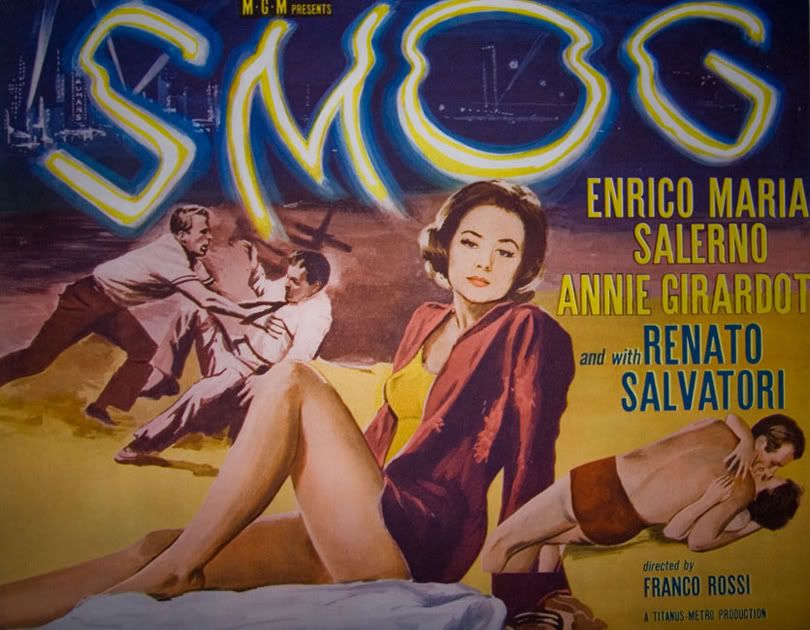
Smog 1962 Rossi Lobby Card 1Smog is an Italian film directed by Franco Rossi from 1962. It screened April 7 at the Billy Wilder Theater (within the Armand Hammer museum) in Westwood, which seems to be the new home of the UCLA Film Archive. I went to see it because I learned that it was shot in LA, and I've become one of those Angelenos who loves to do cinematic archaeology of the city. Smog is also one of those films which does not exist on DVD in any form at the moment (bootleg or otherwise), and I really make an effort to see those kinds of rarities when I can.

The title "Smog" grabbed me, leaving me wondering if there was any connection to Italo Calvino's short story, "La nuvola di Smog." I read the story several years ago and tossed around ideas for adapting it into a short film as I drove my commute in-and-out of Hollywood on La Cienega everyday, past oil drills pumping in the shadows of Baldwin Hills suburban ranch homes. The film had no connection to Calvino, but I was happy to find a nice little cinematic gem. This film shows some interesting locations, from the opening at LAX to Sunset and Hollywood Boulevards, to the oil fields in (what is referred to as) Culver City. ( They looked a lot like the ones off La Cienega, but it was hard to be sure ). It's interesting to see what's changed and what has stayed the same. Beyond just the physical locations, it's interesting to see the portrayal of an ex-pat community in Los Angeles, since communities of foreign-born people, like the landmarks, are characteristic of the city. In 2008, I have not encountered any large community of Italian-born people in LA, and I wondered whether this reflected a reality in 1962 that has since changed. But the attitudes and ideas could be transposed to Korean or Latin-American or what-have-you.

The story is simple: A lawyer from Italy has a stopover in LA on his way to handle a case in Mexico. He is released from the airport without passing through immigration by an airline attendant who keeps his ID. He intends to do some brief sightseeing in Hollywood, but quickly discovers that the real Hollywood is nothing like what he imagined. Unable to function in English, he quickly falls in with various Italian ex-pats, making friends with their affluent and well-connected American contacts. Most of the Italian people Vittorio comes in contact with are hustling different jobs, installing stereo equipment, teaching Italian language to rich housewives, doing caricature artwork, etc. One of them, Mario, is a particularly ambitious Jack-of-all-trades type who sinks below Vittorio's standard of morality with his credo of "A little ingenuity, a lot of nerve."

Smog 1962 Rossi Lobby Card 5

Renato Salvatori as Mario, teaching Italian to idle housewives.

Smog 1962 Rossi Lobby Card 5
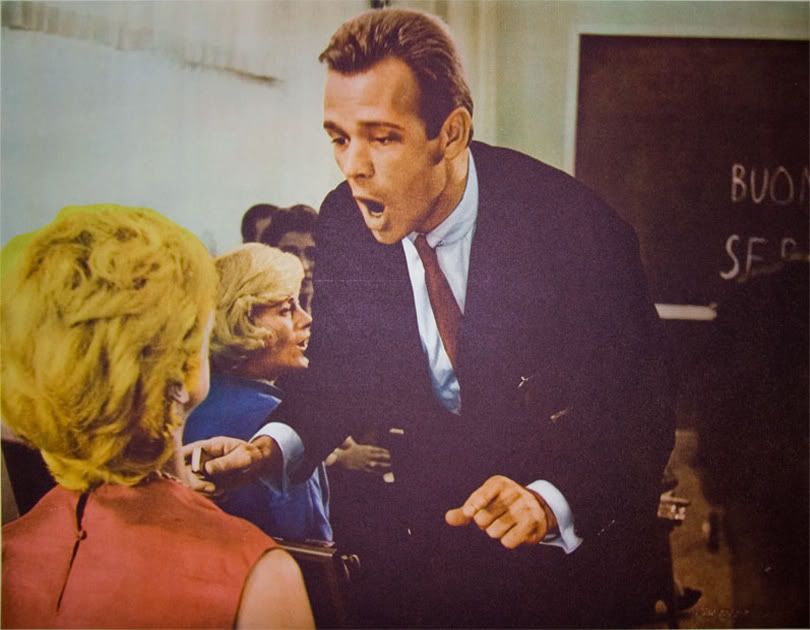
Mario and Vittorio (Enrico Maria Salerno) later have out over some cash missing from Vittorio's jacket pocket.

Vittorio sees himself in a different class of people than most of the countrymen he meets in Los Angeles. When asked by an airline attendant if he would like to pass time in a waiting room with an Italian couple he'd met on the plane, Vittorio shrugs them off, saying, "They're just some immigrants I met on the plane. Italians are OK in Italy, but..." He seems to find much more in common with the affluent people he meets at a Pasadena cocktail party, even if they mispronouce his name, insist that he is the "ambassador of somewhere," or generally rely on him for entertainment.

Smog 1962 Rossi Lobby Card 5
Vittorio accompanies Gabriela to a high-society cocktail party, where he seems to feel right at home, despite his inability to be understood.

I read the film as a statement on the difficulty of connecting on an honest human level with anyone in the city, regardless of their language or nationality. It's a familiar theme in many movies about Los Angeles, and is explored visually through Vittorio's outsider perspective. At times, the "smog" layer which inhibits human contact is so thick (as in a bowling alley's barroom, choked with cigarette smoke) that it is nearly impossible to see the faces in front of you. Race, class and language are the obvious barriers dividing people, but even Mario and Gabriela, who share a language, culture and situation as foreigners, seem to be pursuing dreams on parallel but separate paths, only overlapping when they need each others' comfort. In this regard, although Smog may have originally been made primarily for an Italian audience (not sure about this, but it is mostly English-subtitled Italian language), it belongs solidly among the ranks of other films about LA, many of which observe the isolation of its people.

Smog 1962 Rossi Lobby Card 1** I did a search for information about the film on the internet and found a review that Time magazine published in 1962. It leads me to believe there may be two endings to this film, since the one mentioned in the review differs from what I saw. The Time review mentions Vittorio becoming trapped in the home of an architect, where design has overwhelmed function. The ending I saw had a considerably less sardonic tone, leaving Vittorio to revel at the party with his new friends, and following Gabriela back to the home she dreams of buying. Gabriela, the passed-over girl who leaves the party alone, spends the night with Mario, the uninvited, who nonetheless understands status even if he cannot transcend his own. Although they have each other, it is only for the night, and the film ends with Gabriela watching Mario drive away to begin his hustle anew. If this film ever sees the light of day on DVD, it would be cool to find out whether or not there was an alternate ending, and why.
Smog 1962 Rossi Lobby Card 1Smog 1962 Rossi Lobby Card 1
Mario takes a dip in Gabriela's dream pool. Vittorio passes out after drinking too much at the bowling alley.

Friday, March 07, 2008

Restaurant Revenge

Every now and again, when I have to stay late at work, I end up putting my name down on the "dinner order" list. It's a service the company provides when you stay past the normal 8 hours, so you can keep working without leaving your desk in search of food. Unfortunately, more often than not, the food we end up ordering ends up being disagreeable in one way or another.

I've been known by some to be a picky-eater. On the other hand, I've eaten stuff that might make a lot of other people puke at the mere thought of: I'm talking about bowls of guts served up hot and steamy from street vendors in Bangkok at 3 in the morning. I can and will put all manner of stuff down the hatch in the name of "experience," but when it comes to defining what kind of meal "hits the spot," or at least, "fills the void," I get a lot more discerning.

Most of the time, I turn my nose up at the "dinner order" list merely because I cannot stomach eating from the same place yet again. The pick-up is handled by our in-house driver/delivery team and the dispatch lady who works the night-shift does not like to have her drivers travel further than about 3 blocks. That puts severe limitations on dinner.

Anyway, since I've tried slipping other suggestions in, to no avail, the best revenge I could come up with, finally, to vent some of the ill-will that comes with being hungry and forced to settle for something dissatisfying (when more satisfying stuff beckons from home, less than 10 miles away), is to write a restaurant review and post it online!

This one is for Zeke's BBQ, and it's online at citysearch.com

To be fair, I contacted Zeke's management first, to complain about the burnt and oily food, but never received a response of any kind. I figured if they could torch my veggies, I could torch their rep. Honestly though, I can't imagine anyone being swayed for or against a place like Zeke's by a restaurant review.


BURNT VEGGIES TASTE LIKE CHARCOAL
03/06/2008 Posted by flyingdutchman

Another place that is conveniently located near my work. Unfortunately, like most of the other eateries around the Highland-Santa Monica-La Brea intersections, the food is not so hot. The one thing I can wholeheartedly recommend is the root beer. It's delicious. But then, Zeke's doesn't make it, they just sell it. The BBQ is so-so. I would go with a pulled pork, or brisket. I'm not a huge ribs guy. Food's not bad. But never eat their "grilled" veggies. Those BBQ'ers in the back like to torch the life out of the food, until it all tastes like ash. Is this some kind of macho revenge against vegetables? Does it make the BBQ more "authentic" if you incinerate the food? I've complained about it before and gotten no response. I give up. If I am forced to go there these days, because of work, I just eat the brisket, down a root beer and get on with life. Functional, but not enjoyable.

Pros: Great Root Beer in a big bottle

Cons: Most menu items are cremated

Wednesday, February 27, 2008

Bizarre New World: My Debut as a Comic Book Character

My friend Skipper Martin had been talking about this story idea of his for almost as long as I'd known him. The first time I heard it, it was not quite developed; mostly just a concept. I remember him giving me the intro over some Mexican food, and it went something along the lines of ... "Let me pick your brain for a minute... Suppose you could fly..."

Skip, lover of all things Superman, wanted to write a story about a flying guy. A flying guy who resembled Skip. Uh-huh. Actually, even in that earliest incarnation, or swirl of ideas, Skip was imagining a flying world, because directly after the "what if you could fly" questions came the "what if everyone could fly" query.

I admit I was a little more focused on my margarita than on the idea of a story about flying people. It seemed too "Superman" to me. So Skip went away with the idea and came back a couple years later with a much more evolved pitch. He sent me a story outline with a three-act structure that had a strong father-son relationship, a villain, and a satiric take on religion and the media. In other words, something (other than the enchilada I had been eating last time) that I could really sink my teeth into.

One thing about Skip, the man has deep convictions. He believes in his own ideas - although not in an arrogant or immodest way. He is always open to other peoples' views. He always weighs his friends' opinions. But he has the kind of conviction that's necessary to do creative work, to take a project from his head to the sketchpad to completion.

Along with the story outline, Skip told me his plans to turn this into a serialized comic book. He was going to find an artist. He went out and shot "research photos" from a helicopter, to provide the artist with realistic aerial views. And every so often, I would get a peek at how things were progessing.

A half year or so later, Skip again prefaced one of our conversations with "Let me pick your brain..." He said he'd been mulling over the "problem" of how to explain his protagonist's ability. He wanted my theories on the subject. He said he wasn't convinced that it was actually important to his story, and I agreed. But he said he might want to do a scene where several characters discuss theories of how unaided human flight MIGHT be possible. I gave him my best theory, which came from my experience scuba diving. In short, I guessed that you could metabolize atmospheric gas into something lighter than air, which would be stored in your tissues, giving your whole body "buoyancy." Skip liked it.

When I received the first page layout showing myself in comic book form, I was amused to find that I was wearing the same London Underground T-shirt and grey hoodie. I guess some caricatures have some truth to them.
So, several months later, I got a call from Skip saying he'd like to drop by my office to take a couple of "research photos" of me to give to his artist. He cruised by, jumped out of his car, snapped two or three quick shots and disappeared again.

All this while, Skip was busy working away on his book, unsure of how he would eventually get it out into the world. Everything was being done out of his own pocket. (Remember what I said about the strength of his convictions). He prepared a fine leather portfolio with oversize inked and colored pages to display to potential publishers. On the strength of that presentation, he was given meetings to discuss his book, and eventually got a distribution deal with Ape Entertainment.

The three-acts have been broken up into three "series" for publication, each consisting of three comic book issues. The first series, in which I make my cameo, was published to strong critical response last year. The next series, titled "Population Explosion," is due to hit stands soon.

Lately Skip has been a busy guy, doing interviews and promoting the book. I wonder if my character will ever return - with the ability to fly?

Pick up Bizarre New World at a local comic book store, or visit the website for more info.

You can hear Skip in an interview from cindy.com here.

JLPTの3級を受かった


Well, once again I passed the JLPT - Japanese Language Proficiency Test. The test is given every year around November or December and it takes until February to receive the results. There are four test-levels; level 4 and 3, which I have now passed, are the easiest. I understand that Level 2 is significantly harder. There are three sections to the test: Writing/Vocabulary, Listening, and Reading/Grammar. The only section I improved on from last year was Reading/Grammar. My listening really went down. I guess that's what happens when you stop taking classes.
Passing score was 240/400. I managed a 317 this time. 50 points down from last year. Guess I better study up if I plan to keep going.

Tuesday, February 05, 2008

The Endangered Iriomote Wildcat

I just read this article in the New York Times about the danger to the Iriomote Yamaneko and decided I'd like to add a few personal notes to it.

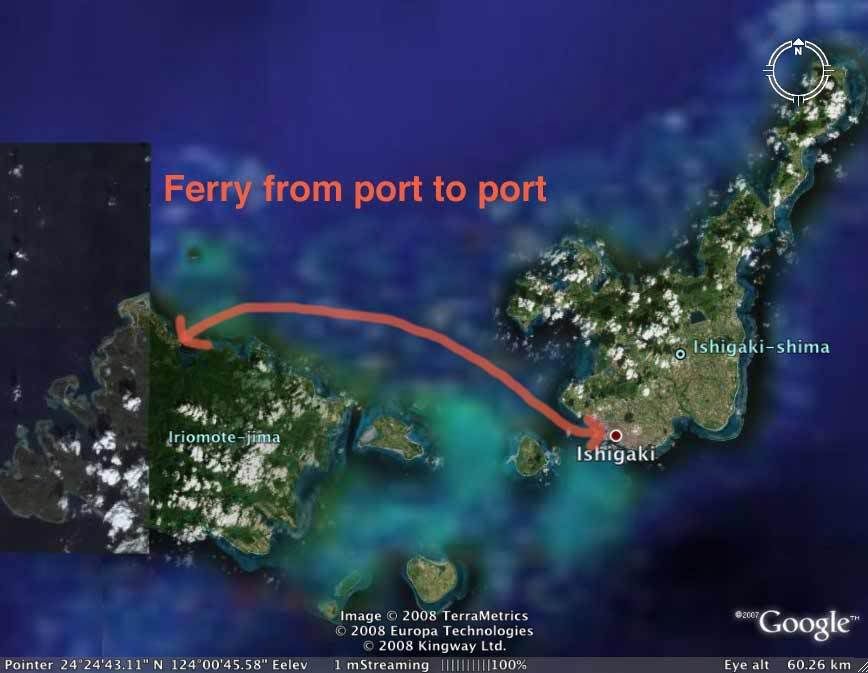
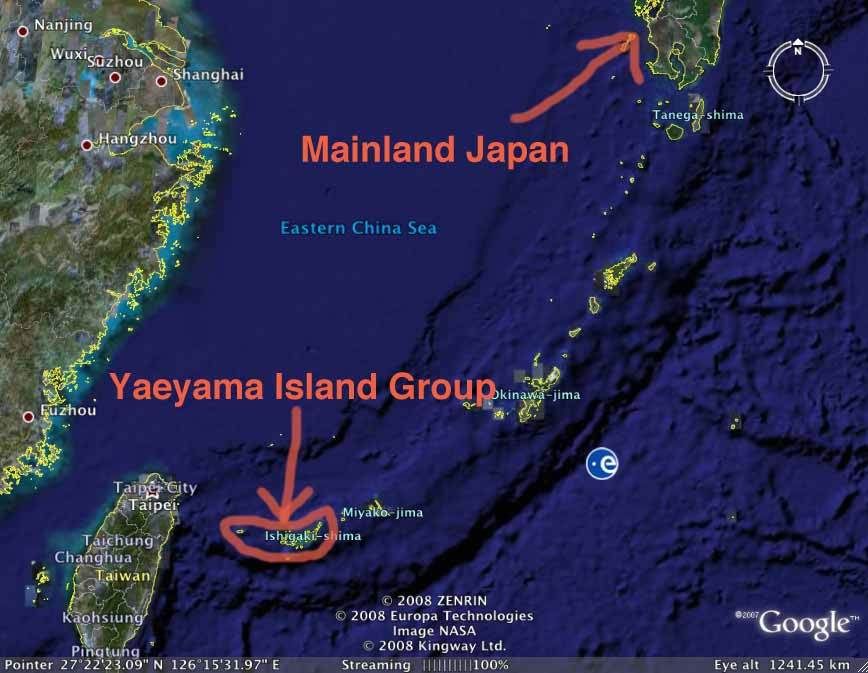
PhotobucketLast April I traveled to the Yaeyama Islands in Okinawa, Japan. It's a small island chain between the Pacific and the East China Sea, just shouting distance from Taiwan. It's a small sub-chain, along with the Miyako, the Kerama, and the main island of Okinawa (mostly known here as the home of the US military) that make up the prefecture of Okinawa. But the Yaeyama chain has it's own distinct flavor and culture, stemming from the small size of the islands and their mostly untouched rural nature. Most of the land is used for farming and raising cattle. The other main industry is tourism, with most tourists coming form within Japan. The landscape is so different from mainland Japan, that people want to come to experience something foreign and to relax in these undeveloped island settings. Kind of like US tourists going to Hawaii, but in the Yaeyamas, there is really nothing equivalent to the sprawl of Waikiki, which makes me feel like I am in downtown Santa Monica, CA. Ishigaki is the Yaeyamas' most populous island, and most of its population (about 44,000) lives in the capital city at the south of the island, preserving an undeveloped island feel for miles northward.

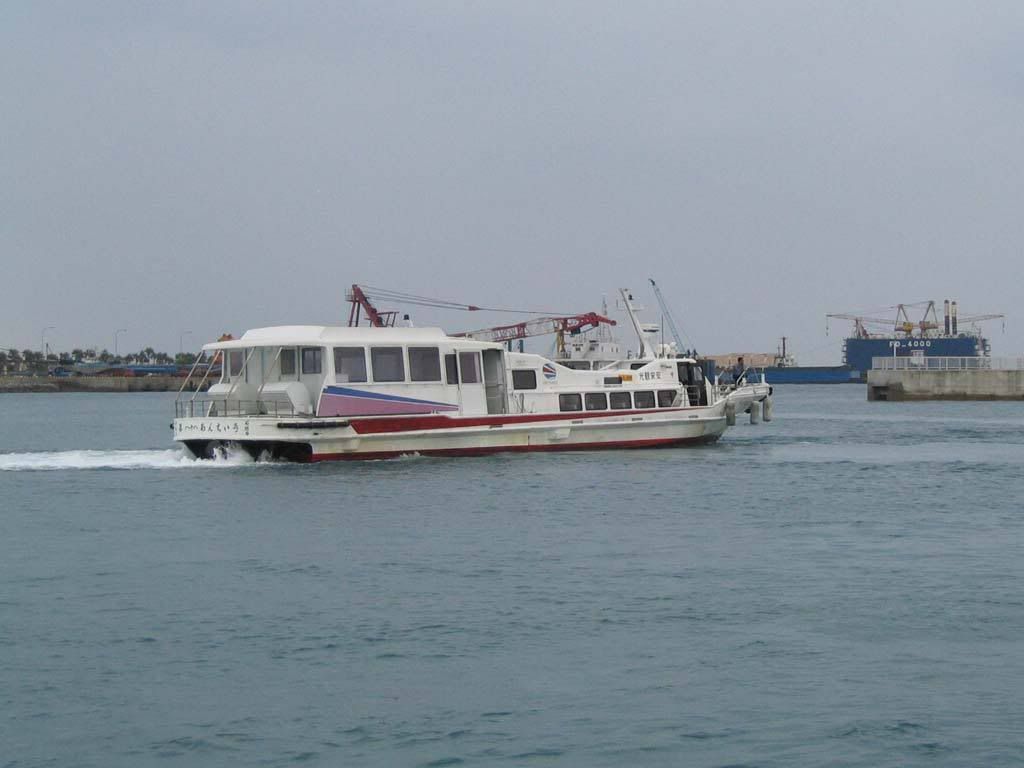
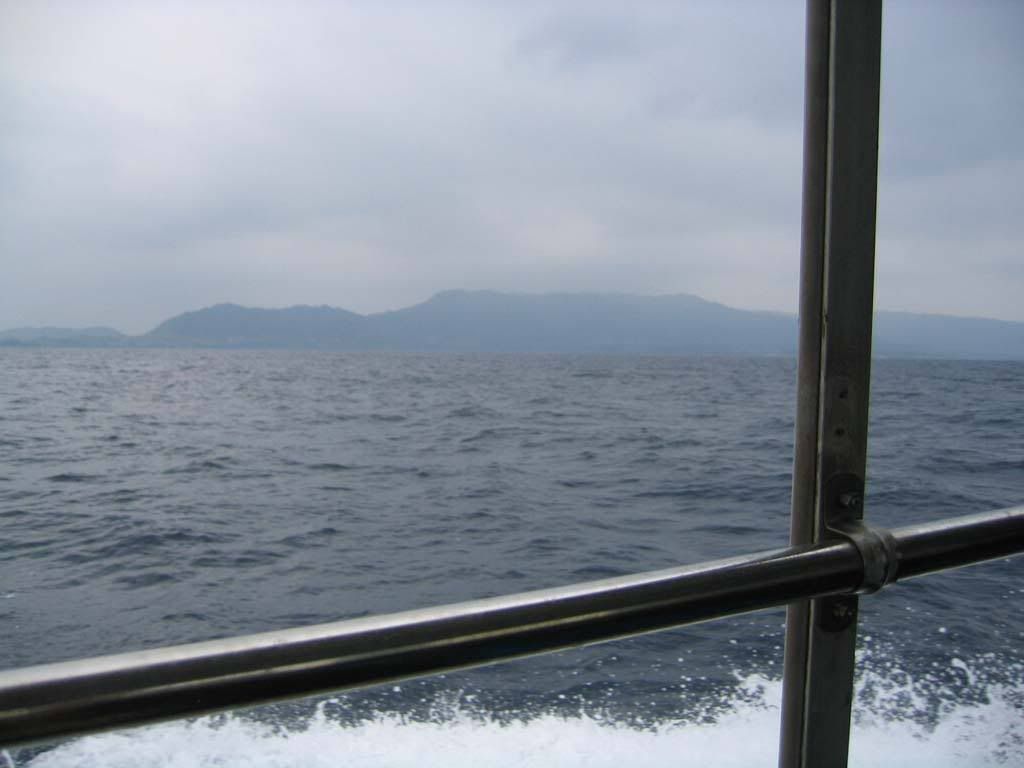
Anei Kanko FerryYaeyama Islands Satellite ViewFerry to Iriomote

Among the chain is Iriomote island, about an hour by ferry from Ishigaki, which is the main travel hub in and out of Yaeyama. Iriomote is actually the largest island in the chain, but also the least populous (currently). With only 2,325 people, the island is designated as a national park by the Japanese government. From what I could see, tourism was indeed its biggest industry. Most of the island is an undeveloped natural paradise. There is one two-lane road that makes an arc around the western half of the island (the eastern half cannot be traveled by car). Most of the businesses (shops, inns, gas station), towns, beaches and other attractions are accessed by this road.

PhotobucketOne of the biggest draws for me to visit there was the possibility of hiking into the unspoiled back-country. I read about this on a site written in limited English, and I just had to do it. So, with help from a Japanese-speaking friend, I contacted a guide who agreed to take me on the hike, which traverses the entire island in a day (approx 16km - not very hard, but all of it through wild jungle).
I read some accounts of English-speaking tourists doing the hike by themselves. There were a handful of American or British English language school teachers living in Japan, who traveled to Iriomote on their vacations and decided to do the hike. They gave good information, but also confessed that it was impossible at times to find the trail and it took them far longer to finish than was estimated. One very helpful blogger, Justin, corresponded with me and sent his photos taken with his girlfriend while on the hike. They could not read Japanese, though, and halfway through the hike they encountered a sign with writing in green and red. They followed the green arrow. They got lost, it began to rain and they had to pitch a tent. The next day, his girlfriend fell in a river and got her passport wet. They made it out and enjoyed it. I was not discouraged, but I did not want to spend the night in the jungle with the Habu - a poisonous, and nocturnal, pit viper.

As it turned out, enlisting the aid of the guide was one of the highlights of my trip. His name was Morimoto-san (nicknamed "Taishi"). Despite his limited English and my limited Japanese, he was a wealth of information about the jungle, having lived on Iriomote for years. He was not a native of the island, having moved there from Kyushu, but he was the only dedicated volunteer park ranger, and generally seemed to be regarded locally as a leading authority on the flora and fauna there.

Taishi Morimoto Iriomote Guide
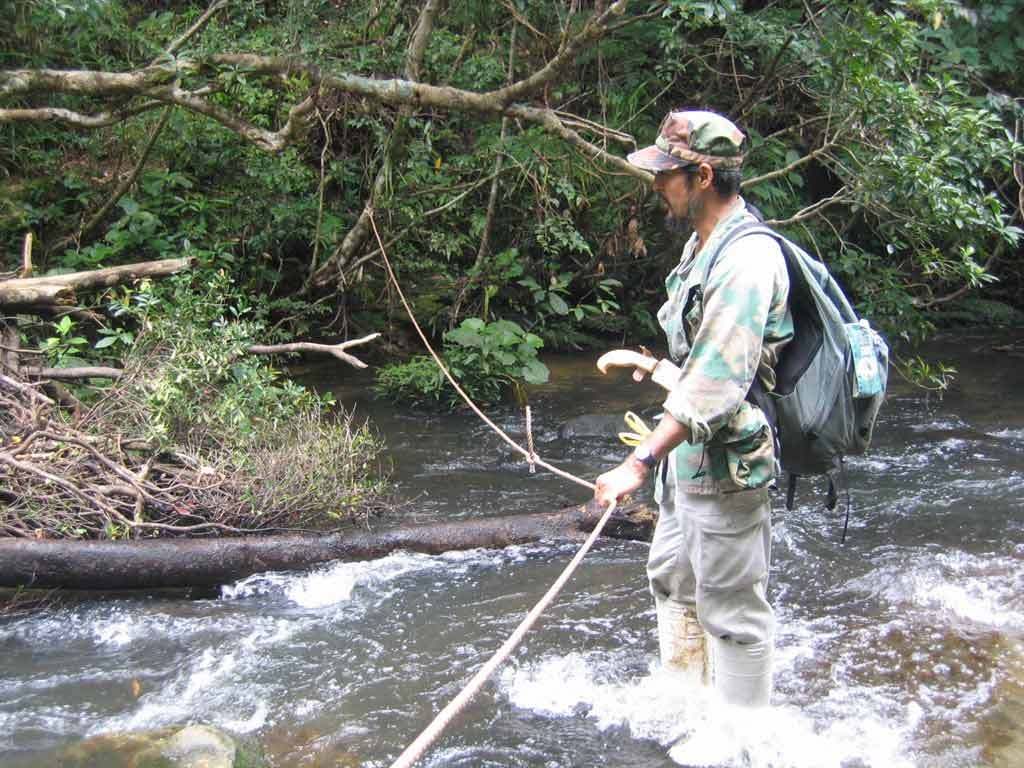
We drove together to the mouth of the Urauchigawa and boarded a boat upriver to the trailhead. While we hiked, he would identify trees, plants, bugs, even historical artifacts from the Ryukyu era and the coal-mining days, sometimes pointing to illustrations in a nature encyclopedia that he had contributed to. When our crossing was blocked by a fallen tree, Morimoto-san would pull out a fold-up saw he kept in his pack and cut through the branches. When we passed calf-deep through running water (acquiring some leeches in the process), there were ropes to hold onto, which Morimoto-san had tied in place previously. Taishi Morimoto Iriomote OdanIf he saw the smallest scrap of an object foreign to the wilderness, like an old sock, he picked it up. Thankfully, there was very little of that kind of thing, since few people pass through here. He told me that he was not paid for serving as a ranger for the island, so acting as a guide provided him with an income while enabling him to maintain the wilderness.

When we reached about the halfway point, we passed the sign that had scuttled Justin and his girlfriend. Next to the green arrow Morimoto-san had written, "Dame," meaning "No good, don't pass this way." That path had been made impassable by a typhoon. The red arrow pointed the proper way out to Ootomi village, and after taking a short break we followed it. Again, I was glad I had chosen to go with Morimoto-san.

Iriomote is the world's only home to the yamaneko, which Morimoto-san told me was about the size of a housecat. This animal has been made famous in Japanese animation (thereby introducing it to an audience worldwide), but few people have actually seen the animal. Morimoto-san has seen it and a big part of his passion for preserving Iriomote's ecology is tied up with preserving the yamaneko. He told me that there were thought to be only about 100 of the animals left, and that each year an average of two were killed while crossing the island's only road. The road now has warning signs with images of the cat, drawn by Morimoto-san himself.

Photobucket
After finishing the hike, Morimoto-san's wife picked us up at the south end of the island and we made our way back by car. Along the way, they pointed out two new hotels being built. Just last year, most of the lodgings on Iriomote were rather basic. The place I stayed was a minshuku - akin to a hostel, with simple rooms and tatami mat beds. The new buildings looked as if they might cater to a more deluxe class of traveler. On the one hand, this may be good for Iriomote's economy, and probably bring more business to Morimoto-san and other tour guides (not to mention more money for natural preservation projects), but their construction and existence also threatens the already perilous balance of nature on the island. The worst thing for Iriomote would be a large influx of tourists not interested in the jungle, but only in expanding the frontier of the "Club Med" type experience.

I did not see the yamaneko while doing the hike. But I hope that I could still have a chance to see one on a return trip.
If you decide to go to Iriomote, visit the jungle with Banana-House (Japanese only), Morimoto-san's tour company. You do not have to trek the entire island, he also offers kayak trips and other activities.
Also, look up Kanpira-So as a place to stay, and see if you can go snorkeling or hike to Pinaisara Falls with Toshio, who operates the Mifaiyu tour service, next door to Kanpira-So.

Thursday, January 24, 2008

Peter Fuller Memorial Dive

9/1/07
This post comes 4 and a half months late. But at least I can finally share some video.

Labor Day Weekend was hot. Of course, it's always hotter under the sun when you're suited up in black neoprene. It felt good to get underwater and cool off a bit. With Richard and Danica bringing along a DV camera, I joined Randy & Paige Sanders, as well as John "The Tank" Flores and his daughter, and Frank Enos at Catalina Dive Park on a Saturday morning to place a bronze memorial for Peter. It had been almost a year since Peter died.

Randy and Paige came up with the idea to do this and were just forming a dive club at the same time. Several of the members of the newly-formed Kelp Crusaders donated money to make the plaque and came along on the dive to place it.

Sometimes I am reminded of a conversation I had with Eric Grush on the lawn in front of the Butler house. I think both of our heads were filled with memory fragments, the kind of rush of bits and pieces that your mind sifts through like a nervous assistant, waving some forgotten file overhead in the excitement that it might mean something.
"He's not Sid Vicious," Grush laughed.
Meaning, I guess, let's not obsess over details, like fans.
I've tried to keep that in mind, in order to keep things in balance.

Randy and Paige affirmed that they did not want this event to be a somber affair. A service or memorial is for our own benefit anyway. Placing a stone or marker might mean nothing at all. Pictures and dreams might mean nothing.
But the change affected on all of us by one individual is substantial and real.

It's a strange bond that we have with the water, made stranger for me by the fact that diving was an activity that Peter and I often did together. Ultimately, it produces a very solitary feeling. Most of the sensory interference that we are used to is suddenly eliminated, and we are left with an experience that must be very remniscent of the earliest stage of our human existence. Some of the best moments in diving are floating in 10 feet or less, feeling the tide surge up and down, watching the plants and fish around you move in unison with yourself, sunlight easily penetrating the shallow water and giving everything a golden aquatic sparkle. You accept that being motionless means being in motion.

Thinking about Peter's "last dive" throws me into an ambivalent flux, floating suspended in confusing feelings. We listen to our own thoughts, the sound of our own breathing.

Friday, October 26, 2007

Morbidezza: 書を捨てよ町へ出よう

Film Review: Throw Away Your Books and Go Out Into the Streets
1971 Japan. dir: Shuji Terayama

I recently obtained a copy of a film called Throw Away Your Books, Rally in the Streets made in Japan in 1971. Two weeks prior to watching it, I watched another film from the same era, Easy Rider, with someone from Japan who had never seen it before. Mulling over the Japanese film for several days afterward, I pondered the similarities between the films, and realized bemusedly that "書を捨てよ" probably had the same effect on me that Easy Rider had on my Japanese friend. Probably, neither of us quite grasped the full impact of certain visual (or musical) references, but we each understood that the films represented a bas-relief of the specific cultural attitudes from which they emerged.

I know next to nothing about Shuji Terayama (the film's director), but I have gleaned that he was a member of a group called the Art Theater Guild, which played a crucial role in the independent Japanese film industry starting in about the late 1960s. The Art Theater Guild was a kind of filmmakers cooperative, whose chief purpose was to provide a distribution outlet for struggling independent filmmakers. Japan's film industry at that time was a studio system not unlike Hollywood's of the same era, so forming such an organization made a lot of sense for art filmmakers who would other wise have little chance getting distribution. The Art Theater Guild was able to make one-on-one arrangements with theater owners to give their titles limited runs, at times when theater owners might otherwise be facing programming slowdowns. A by-product of this coalition was that many of these filmmakers collaborated on each others' work - so it became a kind of production workshop/studio in its own right. The roster of Japanese filmmakers associated in one way or another with the Art Theater Guild is an impressive roll call, and includes Nagisa Oshima and Toshio Matsumoto. In this regard, Terayama and ATG occupied a similar space in the Japanese film industry as Hopper, Fonda, Altman and others occupied in Hollywood - at the crest of a wave of changes in film aesthetics and industry business practices.

As a straight narrative, Throw Away Your Books is much more loosely wrapped than Easy Rider (which, as a buddy-road movie, is essentially a "quest," and one of the oldest narrative models known to Western culture). Terayama's film is a series of vignettes, following a young protagonist and his family and friends, intercut with documentary elements. It is bookended by two sequences in which the narrator breaks the 4th wall and addresses the audience in a monologue on the artificiality of cinema. Obviously, these filmmakers who contributed to what became known as the "Japanese New Wave" took much inspiration from the French movement of the same name. However, in content it clearly urges Japan to reclaim an identity that is free of Western influence.

In the film's symmetrical bookend sequences, the narrator speaks directly to the audience, mockingly identifying himself as "no one," a figure of no historical importance. He questions our willingness to sit in the dark and wait for something to happen, for events to be revealed by insignificant shadows on the screen. At the film's end he chides our readiness to stroll out of the theater and let the events we'd witnessed be banished from our memories as daylight banishes the image from a movie screen.

Cueing the lights to come up, the narrator reveals himself to be standing amongst all of the crew members. "Although it is true that movies themselves can exist only in the dark," he tells us, "[from them can be born something which we can take away, into our daily lives.]"

There is almost a pre-punk, anti-Establishment ethic to the film. It swears off Western capitalism, it burns the American flag, there is a "Primer For Young People on How to do Drugs" vignette. It's easy to understand where this comes from. Japan's entire post-war identity was modeled after the US.

Terayama blasts Japan for being "like a lizard, captured in the Cola bottle" of the US, humiliated and incapable of escape. Over a shot of trashed empty cigarette cartons, branded "Peace," one of the film's many songs shouts "We want real peace." It's not just real peace that seems to be the bone of contention, but a real identity of this generation's own making, rather than an inheritance of the legacy of WWII.

All of the angst, the loud music, wild handheld camera, sexuality and drug use is part of the generational rebellion that was ocurring all over the world in the late 60s and early 70s. For American youth as much as Japanese, the generational rebellion was probably influenced in part by the legacy of WWII, since in the US it was the righteous victory against Fascism that was turned upside down in Vietnam which ignited the youth movement. In Terayama's depiction of Japan, WWII hangs over the family, even though the official Occupation has ended. Father is a "beaten dog, a war criminal," who drinks, pilfers money from his son and spies on women in the toilet. "Home is a pigsty," and father wants grandma to go to an old folks' home run by American-influenced Christian missionaries. Terayama's protagonist's urge to leave "home" could be read as a desire to escape the paternalistic shadow of the US.


There is a recurrent image in the film of the protagonist at the helm of a lightweight glider, trying to take flight, but always just barely skimming over the ground. At the film's end, the glider burns in an empty field.

In his epilogue, the narrator tells us that while filming, each actor became their role and thus, each situation became real. And while it played on screen, it was real for each of us in the audience. The glider cannot escape the bounds of the film screen; it crashes and burns, showing us again that reality of art is finite. But the implied hope I think is that the audience will be provoked, and move "skyward" by other means. Terayama was acknowledging that his art was a seed that needed minds to take root.

Lastly, the film has a really cool final credit sequence. There are no names given (at least not on the version I saw). It is merely a long dolly past all of the faces that appeared in the film. Long ago, I saw a student film titled "Morbidezza." The term originated during the Renaissance and described an extreme delicacy in the rendering of human fleshtones. In that film, the filmmaker gathered his family around a dinner table and had them hold a pose for 10 minutes, then slowly tracked over all of their faces. In Easy Rider also, Dennis Hopper films this type of "morbidezza" sequence (to re-appropriate the term). The scene takes place in the hippie commune, during a prayer of thanks for the food they have struggled to farm. I always thought it was astoundingly sensitive and real, and kind of epitomizes a film which has become a time capsule of a specific generational attitude. In Terayama's hands the shot is equally effective, especially following his character's overt bids for anonymity, which the shot proceeds to disprove. "I am no one." "You will forget us," the narrator says. These words lead into the shot, tracking across dozens of faces, in full silence, re-familiarizing the audience with every single cast member of the past two and a half hours. In their plainness and silence, they are rendered un-anonymous. All of their individual characteristics are thrown into relief and we can stare directly into their eyes and see each living soul that played a role in creating this work. It reminds us that each of us has the power to be creative and collaborative in an infinite variety of ways.


One further note -- the last face is that of Akihiro Miwa, a famous drag performer in Japan who has a small part in the film. I really loved Kuro Bara no Yakata (Black Rose Mansion), so it was a surprise pleasure to see him pop up in another film.


A reviewer on IMDB wrote that this was the "strangest" and "best" Japanese film they had ever seen. I would describe it as neither, but it's worth checking out if you can find a copy or catch a screening.

Wednesday, September 05, 2007

Hot Hot Heat

The heatwave is finally over and thankfully, after 5 consecutive nights of being without electricity, I can again turn on a fan, or read by something other than candlelight. The temperatures got up to about 102 around here and apparently 26 people in the Los Angeles area died. Although it sucked not having power for several hours at a time, I thought about people in disaster areas like New Orleans and decided that between water and power, I would rather have water. During intense heat, you can at least jump in the bathtub.

Starting Friday, Tomoko called me to say that people were gathered outside my apartment and the place was dark. The power stayed off for several hours, and was interrupted again each day until Tuesday, lasting longer each time. Monday and Tuesday, we went dark around 5pm and did not have power restored until the following morning.

The odd (and infuriating) thing about it (as anyone standing on the street in the dark at night would have told you), was that it only seemed to be our side of the street that was affected for so many consecutive days. I took a stroll around Los Feliz on Tuesday night and the power was on everywhere else but our street. The neighbors directly across from us all had their lights on and their AC fans cranking away. I sat outside with some neighbors from my building and grumbled over brownout conspiracies and ground my teeth around the words ENRON and energy deregulation.

While it was a nuisance for us, I thought about MacArthur Park not having power for over 48 consecutive hours. Made up of mostly Spanish-speaking Latino immigrant families, they are not a community that is likely to lodge many effective complaints to the city. Was it possible that neighborhoods were selected by such criteria to lose power, thereby preventing an uncontrollable power outage in a more affluent and vocal part of the city? A kind of controlled burn? Gives new meaning to the term "brownout." I read an interview with a MacArthur Park woman who said that her food had spoiled and it was not within her family budget to replace it. There are also stories of elderly people on welfare dying because they were afraid of the energy bill that would come from running the AC for too long.

Amidst all this, there is the debate over whether global warming is "real." What I love most is that conservative thinkers who want us to pay for more power plants are the same people who say it's always been this hot. If that's so, why the hell are we blowing the power grid like never before? I think the answer is that some of those power plants that were taken off-line by ENRON during the California Gubernatorial Coup were never brought back online to full capacity (if at all).

I'm sorting through my fridge now and throwing away food that Tomoko, in all her loving maternal sweetness, bought and cooked for me, and that makes me bitter. I'm sure a lot of other people are more bitter. There's a cool breeze coming through the window now, so maybe all of our tempers will cool. Until, as my neighbor Tom thinks, we receive bills that are drastically higher next month, reflecting the costs of so many new lines and transformers that are being passed on to us. Seems like all the old infrastructure is really going to the dogs.

Time to crack open a skunky beer.

From the LA Times:
Blackout losses no sweat for utilities
Steaming over an abuse of power
This is absolutely miserable